

Best Sleeping Positions During Pregnancy (First, Second & Third Trimester)
Nobody warns you that pregnancy changes your sleep long before the baby arrives — and that something as simple as how you lie down suddenly becomes a whole thing.
You used to fall asleep on your stomach without a second thought. Now you’re somewhere between a pillow fort and a full-on puzzle trying to find a comfortable position. Sound familiar?
Sleep during pregnancy gets harder — and it starts earlier than most people expect. Your body is doing extraordinary things, and those changes affect how you sleep, what positions feel okay, and what’s actually safe as your bump grows.
This guide walks you through the best sleeping positions during pregnancy — from the first trimester all the way to the third — along with pillow tricks, positions to avoid, and honest advice for getting real rest when it feels nearly impossible.
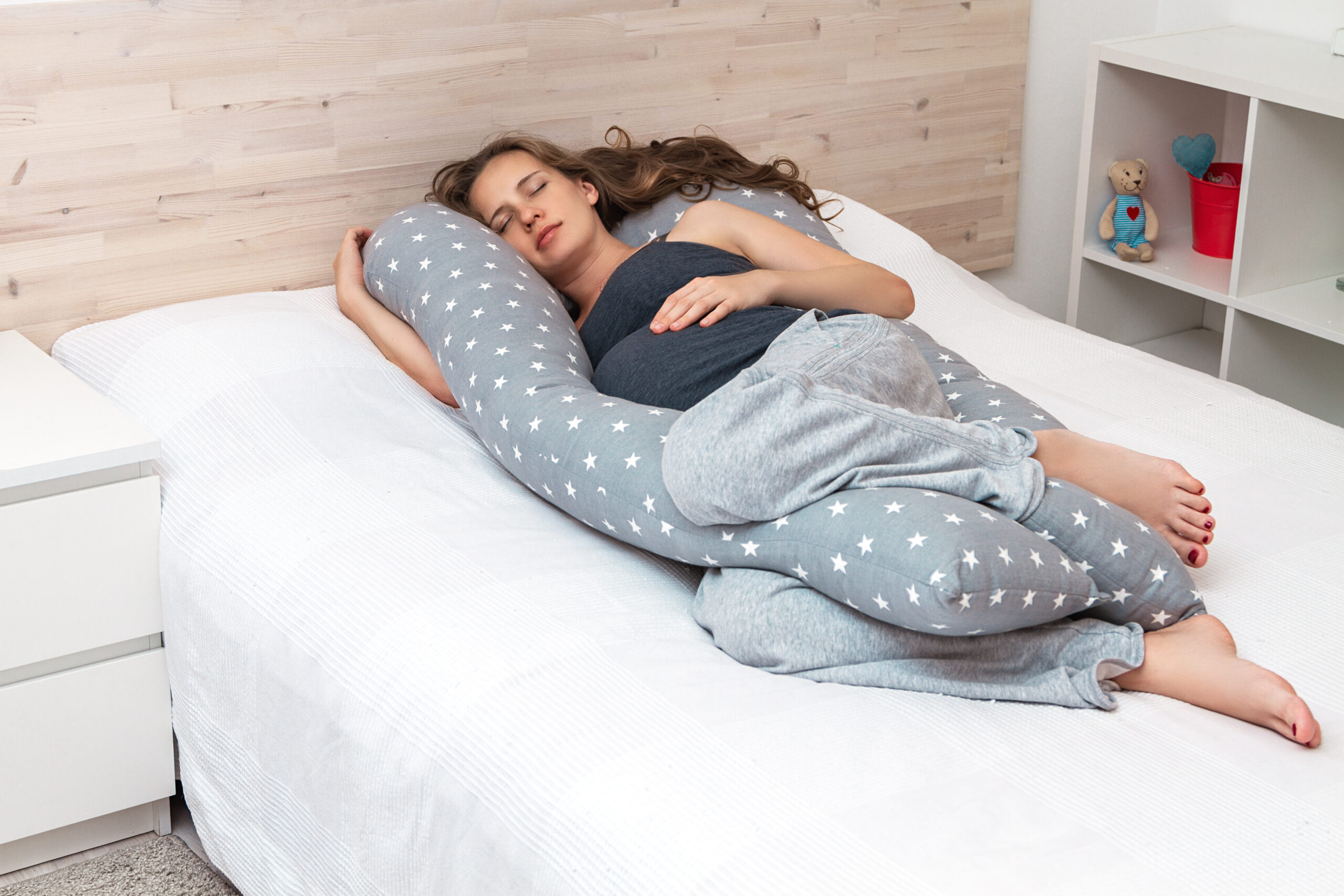
Finding the right position makes a bigger difference than most people realize.
Why Sleeping Positions Actually Matter During Pregnancy
It’s not just about comfort — though that’s reason enough. The position you sleep in during pregnancy can affect your circulation, your baby’s oxygen supply, and how you feel when you wake up.
As your belly grows, it puts more pressure on major blood vessels — particularly the inferior vena cava, which runs along your right side and carries blood back to your heart. Certain positions reduce that pressure. Others don’t. And that’s the core reason doctors and midwives start talking about sleeping positions around the second trimester.
Your kidneys also work harder during pregnancy, so the position you’re in can affect how much you wake up needing the bathroom. Your back, hips, and ribs are under more strain than usual. Everything’s connected — sleep position included.
The goal isn’t perfection. You’ll move around at night — that’s natural and fine. What matters is the position you tend to fall asleep in and the one you drift back to when you wake. That’s where intentional habits help the most.
The Best Sleeping Position During Pregnancy: SOS
You’ll see this term come up a lot: SOS — Sleep On Side. It’s the shorthand that most midwives and OBs use, and it’s backed by solid evidence. Sleeping on your side — particularly your left — is widely considered the safest and most comfortable position from the second trimester onward.
Left side: the first choice
Sleeping on your left side is generally recommended over the right because it takes pressure off the inferior vena cava (that large vein on the right side of your spine), supports better blood flow to your baby, and can ease swelling in your legs and ankles.
It also takes some of the weight off your liver, which sits on the right side of your abdomen. Small detail — but over nine months, these things add up.
Right side: totally fine too
Here’s something many pregnancy articles skip over: sleeping on your right side is not dangerous. The risks associated with back sleeping get conflated with right-side sleeping sometimes, but they’re not the same thing.
If left-side sleeping causes hip pain or shoulder discomfort — which is really common — switching to your right for part of the night is perfectly acceptable. Alternating sides can actually help reduce the aches that come from staying in one position too long.
You don’t have to stay rigidly on your left side all night. If you wake up on your right, don’t panic and don’t stress yourself out. Just roll gently to your left when you can. Chronic sleep deprivation from anxiety about position is worse than occasionally waking up on your right side.
Best Sleeping Positions by Trimester
Your needs shift as your pregnancy progresses. What works at eight weeks looks nothing like what works at thirty-two. Here’s a trimester-by-trimester breakdown.
Sleep however you can — seriously
In the first trimester, your bump is barely there. Stomach sleeping, back sleeping, side sleeping — your baby is nestled deep in your pelvis and well-protected. What matters most right now is just getting sleep, because fatigue in early pregnancy can be overwhelming.
That said, it’s worth starting to practise side sleeping now. If you build the habit early, it’ll feel natural by the time it actually matters in the second trimester.
Start prioritising your left side
Around week 16–20, your uterus grows large enough that lying flat on your back starts to compress blood vessels. This is when doctors begin recommending side sleeping — and the left side in particular.
You may also start feeling round ligament pain (those sharp twinges on the sides of your belly) and hip discomfort. A pillow between your knees makes a real difference here — it keeps your hips aligned and takes pressure off your lower back.
Side sleeping becomes essential
By the third trimester, back sleeping is genuinely uncomfortable for most women anyway — the weight just doesn’t feel right. Your body usually tells you what it needs. Side sleeping with good pillow support is where most people land, and for good reason.
This is when a full-length pregnancy pillow often becomes worth it. Between rib pain, a larger bump, hip pressure, and frequent waking, having proper support can meaningfully improve how rested you feel.
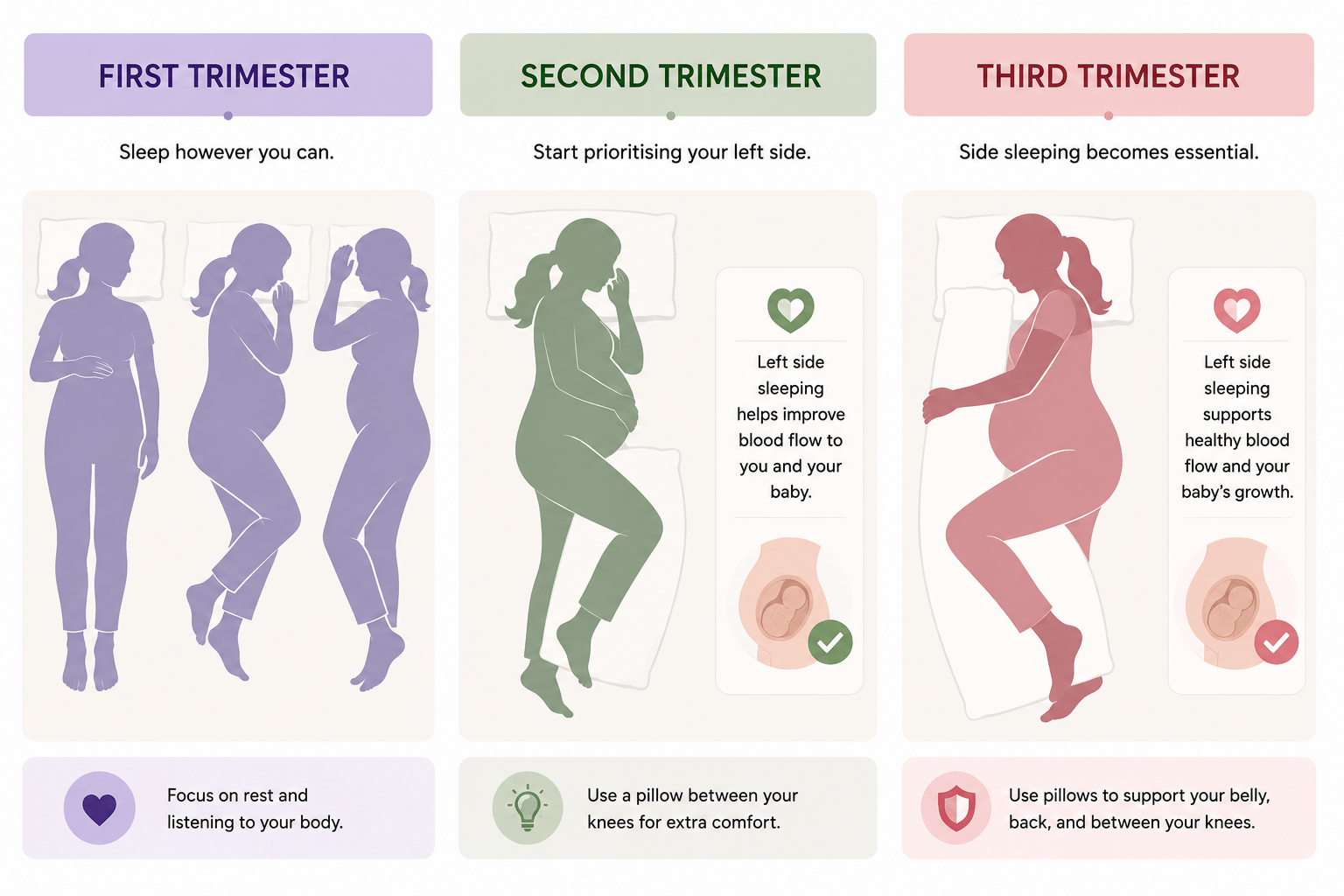
Your ideal position shifts as your pregnancy progresses — and that’s completely normal.
Positions to Avoid (and Why)
Back sleeping in the third trimester is the main position doctors recommend against. When you lie flat on your back with a full-term bump, the weight of the uterus compresses the inferior vena cava — the major vein that returns blood to your heart. Some women feel dizzy, breathless, or nauseous when they try it, which is the body’s way of sending a pretty clear message.
Stomach sleeping is something most pregnant women self-select out of naturally. By the second trimester, it simply becomes too uncomfortable to maintain. If you’re still in the early weeks and love sleeping face-down, make the most of it while it lasts — it’s not a concern at this stage.
- Flat on your back (from ~20 weeks) — puts pressure on the inferior vena cava, can reduce blood flow and cause dizziness
- Stomach sleeping (second/third trimester) — generally impossible by this stage due to discomfort, but not a concern in early pregnancy
- Propped up at a steep recline — can cause strain on the lower back if not properly supported
If you wake up on your back in the night, don’t stress about it. The general advice from most midwives is that if you naturally woke up, your body was already signalling the need to move. Just roll gently to your side and go back to sleep.
How to Use Pillows to Sleep Better During Pregnancy
The right pillow setup can completely change how you sleep. You don’t necessarily need a special pregnancy pillow — though they help a lot — but you do need to support the right areas.
Keeps your hips stacked and aligned — reduces hip and lower back strain significantly. A regular pillow works fine here.
As your belly gets heavier, a small wedge pillow underneath takes the weight off and stops you rolling forward.
If you keep rolling onto your back at night, a pillow tucked behind you acts as a gentle block. It really works.
Supports your bump, back, and knees all at once. Many women say it’s the single best sleep investment they made during pregnancy.
A good pregnancy body pillow wraps around your entire body — giving you bump support, back support, and knee alignment in one piece. It feels a bit ridiculous the first night, but most people don’t want to give it up after they try it.
If you’d rather not go the full pillow route, a pregnancy wedge pillow is a cheaper, more compact option. You tuck it under your bump or behind your back depending on what you need, and it’s much easier to travel with.
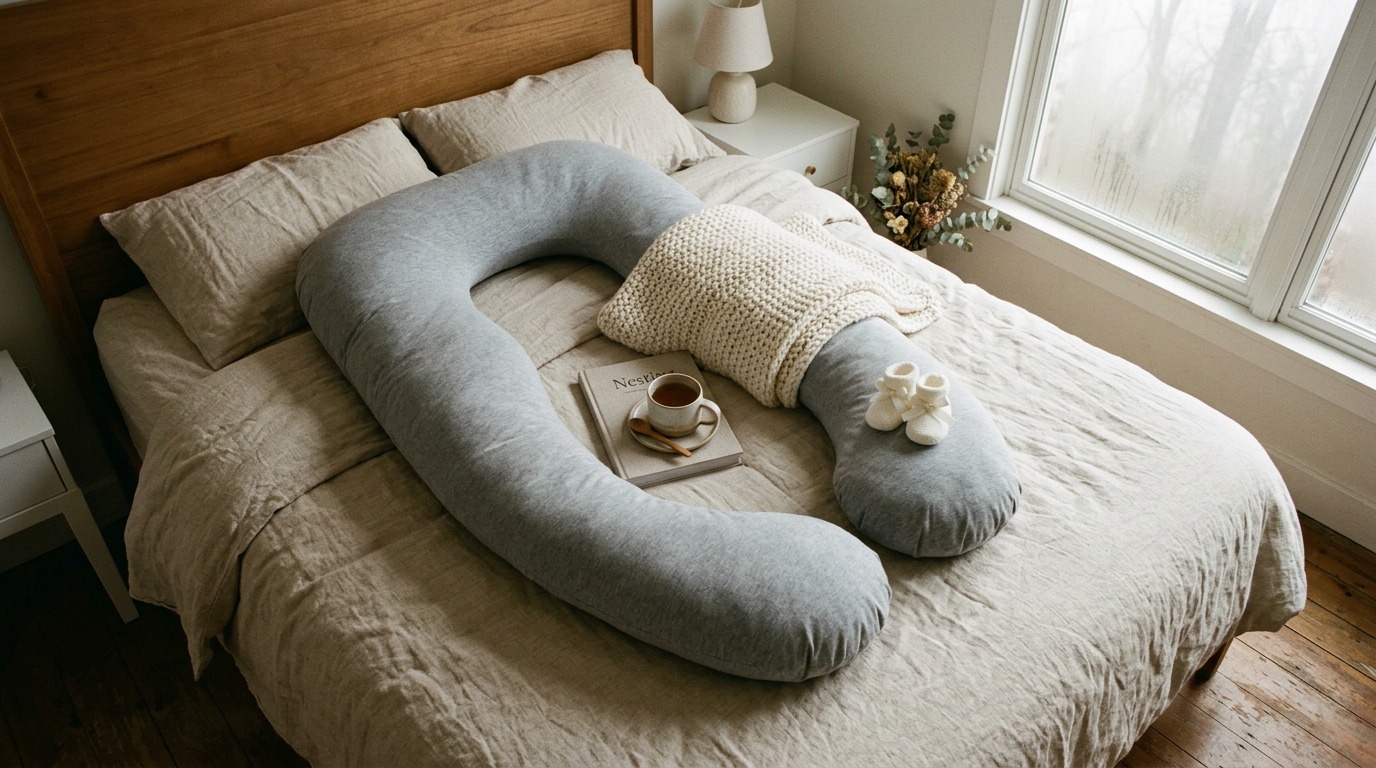
A good support pillow isn’t a luxury — it’s one of the best things you can do for your sleep right now.
More Ways to Sleep More Comfortably During Pregnancy
Position is a big piece of the puzzle, but it’s not the only one. Here are a few other things that genuinely help.
Keep your room cool
Your body temperature runs higher during pregnancy — a natural side effect of all the changes happening. A cooler bedroom (around 18–20°C / 65–68°F) helps offset that. Light, breathable bedding makes a real difference too. Bamboo or cotton sheets tend to sleep much cooler than synthetic fabrics.
Breathable bamboo sheets are worth it if night sweats have become an issue — they’re noticeably different from standard cotton.
Elevate slightly for heartburn
Heartburn is one of the most common pregnancy sleep disruptors, especially in the third trimester. Sleeping with your upper body slightly elevated — using a wedge pillow or by propping up the head of your mattress — can stop acid from creeping up when you’re lying down.
Wind down before bed
Pregnancy hormones, an active mind, and a busy bladder are all working against you. A simple wind-down routine — a warm shower, a few minutes of light stretching, staying off your phone — helps your nervous system shift into rest mode. Nothing complicated. Just consistent.
Don’t fight the bathroom trips
Getting up to use the bathroom two or three times a night is almost universal in the third trimester. Trying to hold it creates tension and wakes you up more. Keep a small nightlight in the hallway so you don’t have to turn on bright lights — bright light signals your brain to wake up, and that makes it much harder to fall back asleep.
Try to limit fluids in the 1–2 hours before bed — not all day, just in that window. You still need to stay well-hydrated, so drink freely earlier in the evening and taper off as bedtime gets closer.
Small habits before bed can have a surprisingly big impact on how well you rest.
Frequently Asked Questions
What if I wake up on my back?
Don’t panic — this is one of the most common worries, and it doesn’t need to be. If you wake up on your back, your body already did its job of signalling discomfort. Just gently roll to your side. Occasionally ending up on your back during the night is not dangerous; it’s just something to redirect when you notice it.
Is it safe to sleep on my right side during pregnancy?
Yes. Right-side sleeping is safe during pregnancy. The left side is slightly preferred for circulation reasons, but if left-side sleeping is causing hip or shoulder pain, sleeping on your right is a perfectly fine alternative. Alternating between the two throughout the night is actually a good idea.
When should I stop sleeping on my stomach?
Most women naturally stop stomach sleeping around the end of the first trimester or early second trimester, because it simply becomes uncomfortable. There’s no hard rule — your body will tell you. If you’re still in early pregnancy and prefer stomach sleeping, enjoy it while it works.
Can sleeping position cause harm to my baby?
In the first trimester, no — your baby is tiny and well-protected. From the second trimester onward, back sleeping is the main thing to be mindful of because of the pressure it puts on blood flow. Side sleeping — left or right — is safe and comfortable for both of you.
Do I really need a pregnancy pillow?
You don’t need one, but most people who try one don’t want to go back. Regular pillows work in the early weeks. By the third trimester, a proper body pillow or wedge makes a noticeable difference in how rested you feel. If budget is a consideration, a pregnancy wedge pillow is a more affordable starting point.
You’re Doing Better Than You Think
Growing a baby is hard work — and doing it on broken, uncomfortable sleep makes everything harder. The fact that you’re thinking about this and trying to find what works says a lot.
The main things to hold onto: sleep on your side, left when you can, support the places that ache, and don’t stress if you don’t stay perfectly still all night. No one does.
Good sleep during pregnancy is less about following rules perfectly and more about setting up the right conditions — a supportive pillow, a cool room, a body that’s been given a little time to wind down — and then trusting yourself to rest.
You’ve got this. And soon enough, you’ll have a whole new set of sleep challenges to navigate. But that’s a different article.
Sleep is the quiet part of taking care of yourself — and right now, taking care of yourself is the most important thing you can do.