

The Best Airplane Sleeping Positions (and How to Stay Comfortable)
The seat barely reclines, there’s no room to stretch, and your head keeps dropping forward. Yet some people sleep through it all — and it comes down to how they hold their body.
Sleeping on a plane is awkward by design. You’re upright, boxed in, and stuck in a seat that wasn’t really built for rest. So the way you arrange your body matters more than almost anything else — the right position keeps your head supported and your spine neutral, while the wrong one has you waking every few minutes with a stiff neck and a dead arm.
The good news is that you don’t need a lie-flat business seat to sleep well. With a few small adjustments, even a cramped economy seat can carry you through a long flight. Here are the best airplane sleeping positions, when to use each one, and the little tricks that make them actually comfortable.
(For the full routine — seat choice, gear, and prep — start with our complete guide on how to sleep on a plane.)
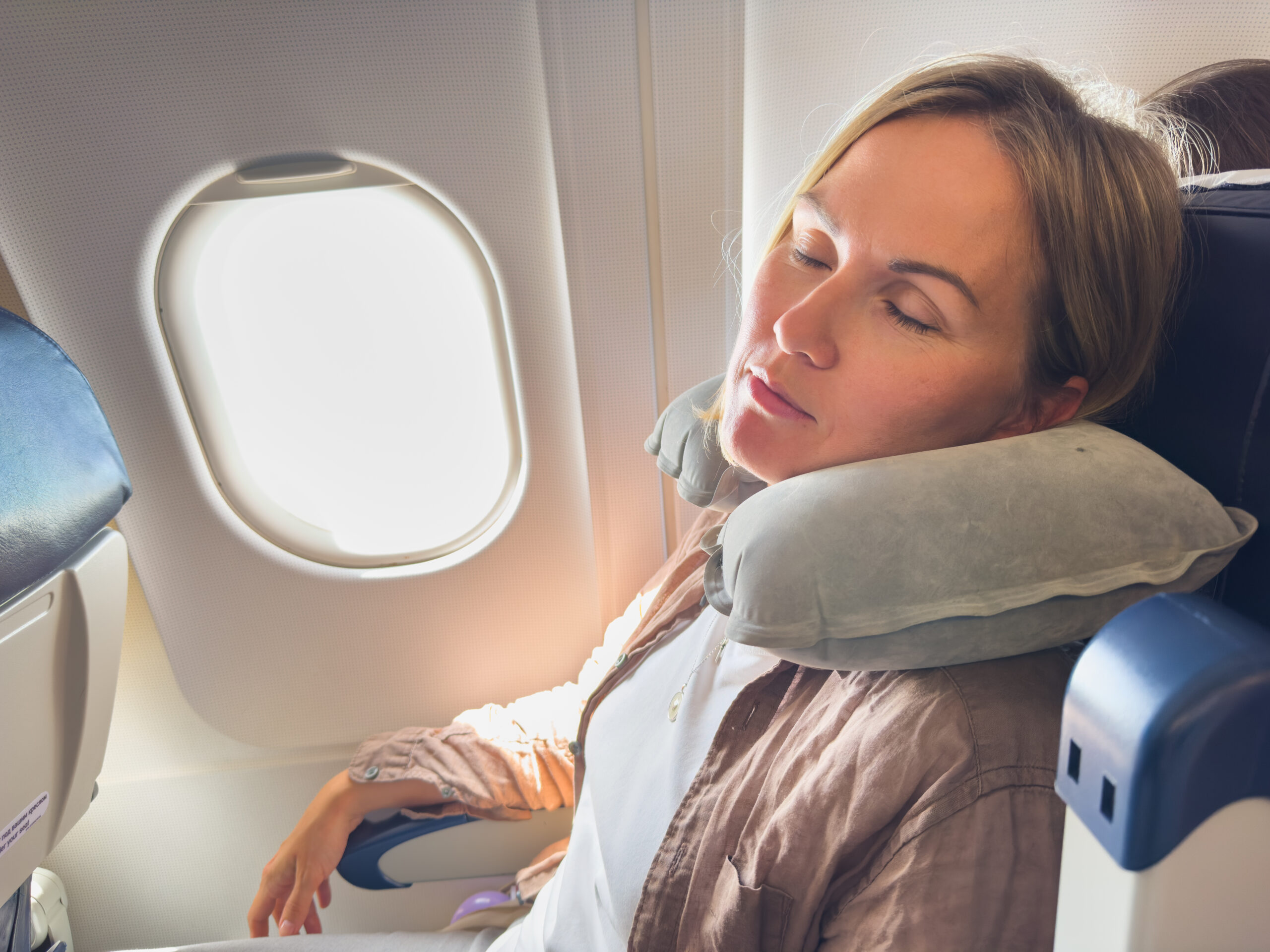
The right position is the difference between dozing off and waking every few minutes.
The best sleeping positions on a plane
Most comfortable in-flight positions come down to one principle: give your head somewhere stable to rest so your neck muscles can switch off. Here are the four that work best, roughly from most to least restful.
Leaning against the window
The most stable position there is. Rest your head against the wall with a pillow as a cushion, and you’ve got solid support that won’t shift. This is why the window seat wins for sleepers.
Reclined with neck support
Recline as far as you’re allowed and let a wrap-around neck pillow hold your head upright. Best for middle and aisle seats, where there’s no wall to lean on.
Forward lean on a tray
Folding forward onto a pillow on the tray table can work in a pinch for short naps — but keep it brief. Held too long, it strains your neck and cuts off circulation.
The slight side tilt
Turning gently toward the window and tucking your chin gives a cozy, curled-up feel. Pair it with a pillow so your head doesn’t slowly slide down as you relax.
Whatever position you choose, the goal is the same: keep your head from dropping forward. That sudden head-bob is the number one thing that jolts people awake on planes, and a good neck pillow solves it almost entirely.
Positions to avoid
Some of the ways we instinctively try to get comfortable actually work against us. These tend to leave you sorer than when you started.
- Head tipped straight back. Letting your head fall backward over the seat strains your neck and tends to leave your mouth open — not restful, and not your best look.
- Slumped fully sideways onto a neighbor. Beyond the awkwardness, your head slides as the plane moves and you’ll wake constantly trying to catch it.
- Curled up with feet on the seat. Tempting on an empty row, but it twists your spine and cuts circulation to your legs.
- Folded over the tray for hours. Fine for a quick rest, rough for a long one. Your neck and lower back pay for it later.
How to make any position more comfortable
The position is only half of it. A few small props turn an okay setup into one you can actually sleep in, by filling the gaps that leave you slumping and shifting.
Cradle your neck
A memory-foam travel pillow keeps your head from dropping and holds whatever position you settle into. The single most useful thing you can pack. This kind of travel pillow works well.
Support your lower back
Tuck a rolled blanket or small cushion behind your lumbar curve so you don’t slowly slump forward and wake up sore through the night.
Lift your feet
Resting your feet on a bag under the seat in front raises your knees slightly, easing pressure on your legs and helping you settle in for the long haul.
Block the light
An eye mask lets you hold a relaxed position without a stray screen or window pulling you back awake. A contoured eye mask blocks it completely.
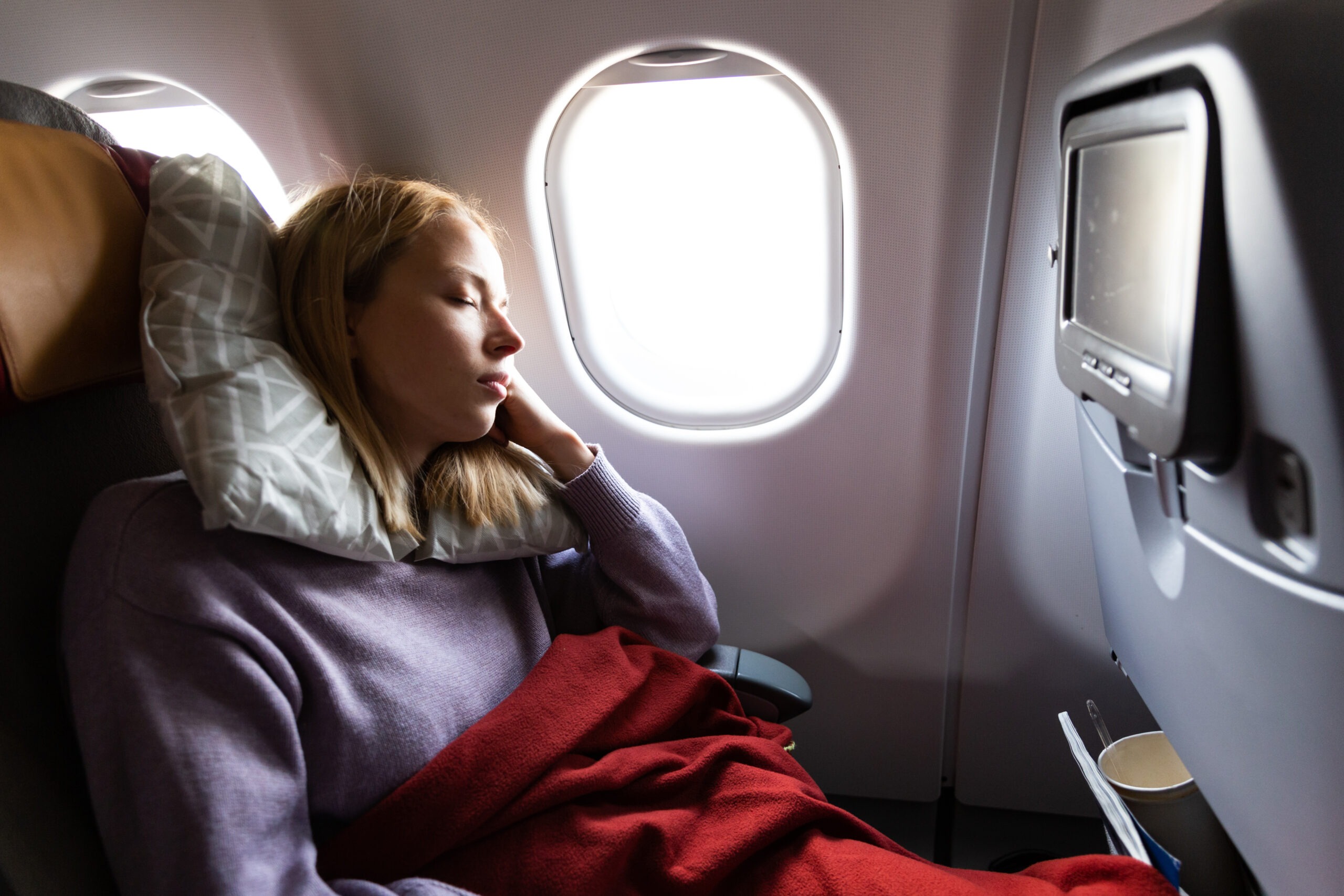
A pillow at your neck and a little support at your back change everything.
Matching your position to your seat
The best position depends a lot on where you’re sitting. Here’s a quick guide to what works where.
| Seat | Best position | Why it works |
|---|---|---|
| Window | Lean against the wall | Solid, stable support for your head |
| Middle | Reclined, neck pillow | No wall, so the pillow does the work |
| Aisle | Reclined, slight tilt | Keeps your head off the aisle traffic |
| Bulkhead | Upright with full neck support | Often can’t recline, so support is key |
If you have any say in your seat, the window is almost always the most sleep-friendly choice — it’s the one position that gives you a wall to rest against. Our guide to airplane sleeping hacks covers how to lock in the right seat and the rest of the setup.
Whatever seat you end up with, the principle holds: support your head, keep your spine as neutral as you can, and block the light. Get those three right and almost any seat becomes one you can sleep in.
You can’t always choose your seat — but you can always choose how you settle into it. That choice is what carries you from takeoff to landing, rested.