
How to Sleep on a Plane The Complete Guide to Resting at 35,000 Feet
You board tired, you land tired, and somewhere in between you spend hours fighting a seat that won’t recline more than two inches. It doesn’t have to go that way.
Sleeping on a plane is one of those things that feels like it should be simple. You’re tired, the cabin lights are off, and everyone around you seems to drift away the moment the seatbelt sign clicks off. Yet there you are, wide awake, shifting position for the hundredth time, wondering why your body won’t cooperate at the exact moment you need it to.
Here’s the good news: sleeping well on a flight is far less about luck and far more about preparation. A handful of small, deliberate choices — where you sit, what you bring, how you set up your little pocket of space — add up to the difference between landing groggy and landing genuinely rested.
So let’s walk through the best way to sleep on a plane, from the choices you make before you ever reach the gate to the position you settle into once the lights go down.
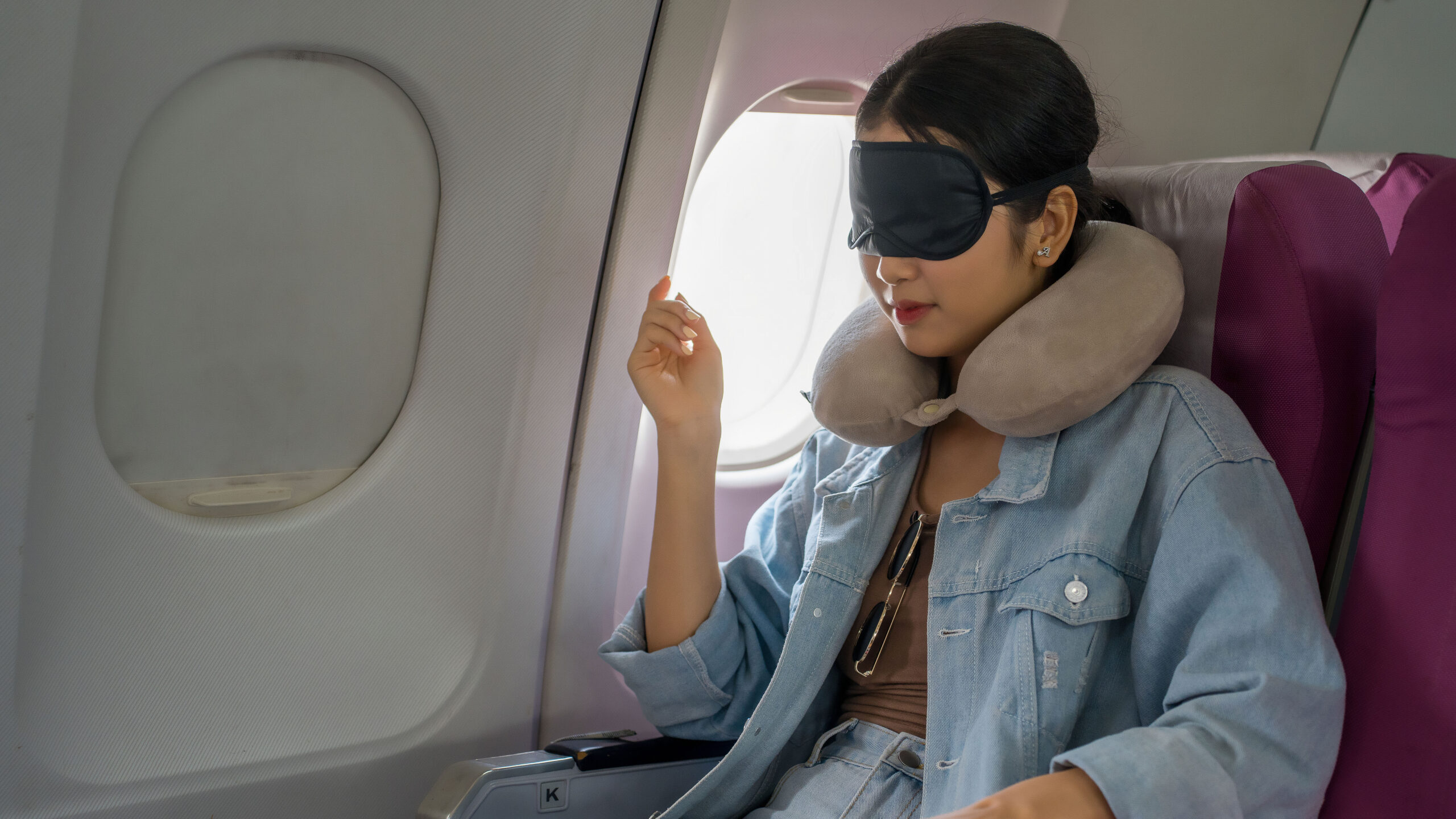
Real rest on a flight starts long before takeoff.
Start before you reach the gate
The most underrated part of sleeping on a plane happens hours before takeoff. Your body sleeps best when it’s already primed for rest, and a little planning on the ground makes the in-flight part almost effortless.
- Pick your flight with sleep in mind. Overnight and red-eye flights work with your natural rhythm instead of against it. If you can choose, a departure near your usual bedtime is gold.
- Dress for the cabin, not the airport. Loose layers, soft fabrics, shoes you can slip off. Cabins run cold, so bring something warmer than you think you’ll need.
- Go easy on caffeine. That pre-flight coffee can linger for hours. If sleep is the goal, switch to water well before boarding.
- Eat light. A heavy meal sends your body into digestion mode right when you want it winding down.
Hydration matters more than people expect. Cabin air is extremely dry, and dehydration makes sleep shallow and restless. Sip water steadily through the flight — your body will thank you when you land.
Choose the right seat
Where you sit shapes your entire flight. If sleep is your priority, your seat choice is the single biggest decision you’ll make — bigger than any gadget you bring along.
The window seat
A wall to lean against, control over the shade, and nobody climbing over you. The clear winner for anyone hoping to sleep.
The aisle seat
Easy to stretch and get up, but nothing solid to rest your head on — and you’ll get bumped by neighbors and the cart.
Beyond the window-versus-aisle question, aim for a seat ahead of the wing and away from the galley and bathrooms, where foot traffic and noise never really stop. Bulkhead and exit rows offer more legroom, but the armrests often won’t lift and the tray table hides in the arm — less ideal if you like to curl up.
Build your in-flight sleep setup
This is where the right gear earns its place in your bag. None of it is essential, but each piece quietly removes one more obstacle between you and real rest. Think of it as recreating your bedroom in miniature: dark, quiet, and supported.
Support your head
A memory-foam travel pillow holds your head in place so your neck can finally switch off, instead of dropping forward and jolting you awake. See a well-reviewed travel pillow here.
Block the light
A contoured eye mask curves away from your eyes and shuts out the glow of screens and half-open shades — the fastest way to drop off. Check a comfortable contoured eye mask.
Quiet the cabin
Noise-cancelling earbuds turn the engine roar into a soft hush, letting your nervous system settle into the calm that real sleep needs. Browse compact noise-cancelling earbuds.
Keep blood moving
Light compression socks support circulation through a long flight, so stiff, swollen legs don’t keep you from getting comfortable. View comfortable compression socks.
If you only pack one thing, make it the pillow. The number one reason people can’t sleep sitting up is that their head has nowhere to go — solve that, and everything else gets easier.
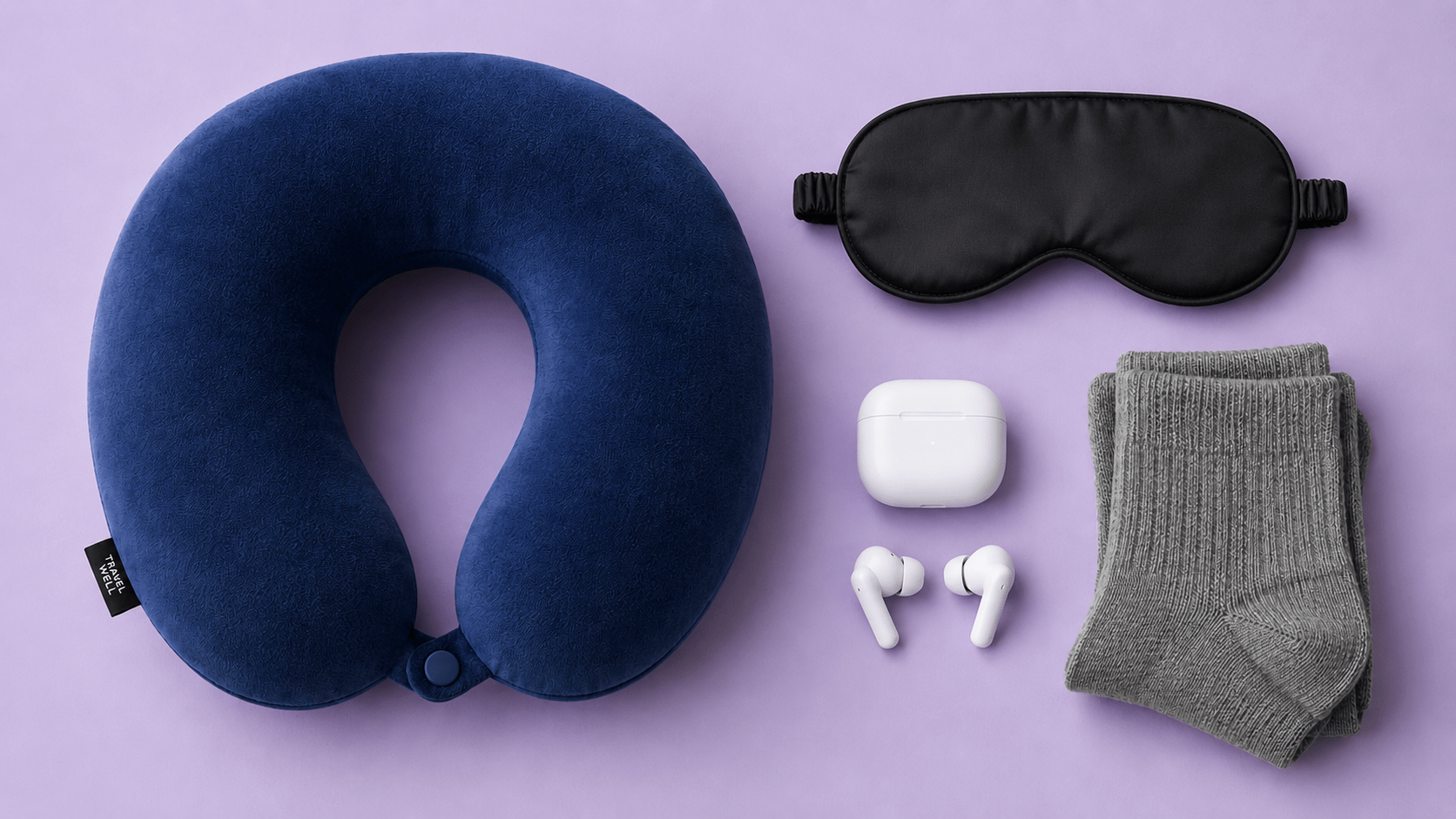
A few small items turn a cramped seat into a sleepable space.
Find a position that actually works
Even with the right gear, how you hold your body matters. The goal is to keep your head supported and your spine as neutral as possible, so nothing wakes you the moment you start to drift.
- Lean into the window. Rest your head against the wall with your pillow as a buffer. The most stable option, and the reason window seats win.
- Recline a little early. Recline as soon as it’s allowed, before your neighbor settles in. Even a few inches takes pressure off your lower back.
- Support your lower back. Tuck a small cushion or rolled blanket behind your lumbar curve so you don’t slump forward as you relax.
- Keep your feet slightly raised. Resting them on a bag under the seat takes strain off your legs and helps you settle in for the long haul.
Resist the urge to fold yourself onto the tray table. It feels tempting at hour three, but it strains your neck and cuts off circulation. Upright and well-supported almost always beats hunched and folded.
Wind down like you would at home
Your brain doesn’t flip a switch just because the seatbelt sign goes off. The same wind-down habits that work in your bedroom work at altitude, and giving yourself a small routine signals that it’s time to let go.
- Dim your world early. Mask on, earbuds in, screen off a good while before you actually want to sleep.
- Slow your breathing. A few minutes of long, slow exhales tells your nervous system the flight is a safe place to rest.
- Skip the screen. The seat-back movie can wait. Bright screens up close are one of the surest ways to stay wired.
- Let go of the clock. Watching the map tick down only makes sleep feel further away. Trust that rest will come.
None of these tricks require much — just a little intention before the cabin lights go down. String a few of them together and you’ll find that sleeping in a flight stops feeling like a battle and starts feeling like something your body simply does.
The takeaway
The best way to sleep on an airplane isn’t one clever trick — it’s a stack of small choices that line up in your favor. Choose a window seat, prep on the ground, pack a pillow and a mask, and give your body the same cues it gets at home.
Do that, and the next flight stops being hours to survive and turns into hours you actually rest through.
You can’t change the seat you’re handed — but you can change how you arrive in it. Rested beats wrecked every single time.