
How to Get Deeper Sleep: 6 Habits That Work With Your Body Clock
You can sleep eight hours straight and still wake up feeling like you barely closed your eyes. Hours in bed aren’t the whole story.
This article may contain affiliate links. If you buy through these links, we may earn a small commission at no extra cost to you.
The quality of your sleep matters just as much as the quantity. Deep sleep — the slow-wave kind your brain needs to fully restore itself — is where the magic happens. It’s when your body repairs tissue, consolidates memory, and resets your mood for the next day. Without enough of it, you can spend all night in bed and still drag yourself through the morning in a fog.
The good news is that deeper sleep isn’t some mysterious thing reserved for lucky people. It’s something you can genuinely encourage. And most of what helps isn’t complicated at all — it’s about working with your body’s natural rhythms rather than against them.

The right environment sets the stage — deep sleep starts long before you close your eyes.
Why Deep Sleep Gets Disrupted in the First Place
Before anything else, it helps to understand what’s actually going on. Sleep isn’t a single flat state. It cycles through different stages throughout the night, and deep sleep — officially called slow-wave or N3 sleep — tends to happen most in the first half of the night.
When deep sleep gets cut short, it’s rarely one dramatic thing. More often it’s a slow accumulation of small disruptions: a room that’s slightly too warm, too much light too late in the evening, a mind that won’t fully let go, or a body that hasn’t been physically tired enough during the day.
What most people don’t realize is that deep sleep is something your body actively builds toward throughout the whole day, not just in the hour before bed. The choices you make from morning onward all contribute to how restorative your night ends up being. For a full picture of the daily habits that shape your sleep, from morning light to evening wind-down, that guide is a good companion to this one.
How to Get Deeper Sleep: Your Environment Matters More Than You Think
Your bedroom isn’t just a backdrop — it’s an active participant in your sleep quality. A few thoughtful changes can make a surprisingly big difference.
Keep it genuinely cool
This one surprises a lot of people. Your core body temperature needs to drop slightly to enter deep sleep, and a warm room actively works against that process. Most sleep researchers point to somewhere between 16 and 19°C (60–67°F) as the sweet spot. Honestly, that feels almost chilly at first — but your body adjusts quickly once you’re under the covers.
A slightly cooler room, a breathable duvet, and maybe a fan running quietly in the background can completely change how rested you feel by morning.
Make it darker than you think necessary
Even small amounts of light — a standby LED, street light bleeding through thin curtains — can interfere with melatonin production and keep your brain in a lighter sleep stage. Blackout curtains or a sleep mask aren’t luxury items. For a lot of people, they’re genuinely useful tools.
Good to know
Deep sleep is most concentrated in the first half of the night. Going to bed even an hour later than usual doesn’t just shorten your sleep — it can disproportionately cut into that deep, restorative first phase. Keeping a consistent sleep schedule is one of the most effective ways to protect it.
Invest in bedding that feels good
It sounds obvious, but it matters. A mattress that causes discomfort, a pillow that’s the wrong height, or sheets that trap too much heat will keep your body in a lower, lighter form of alertness all night. You don’t need the most expensive option — you just need something that genuinely works for you. If back discomfort is part of the picture, the best sleep positions for lower back pain are worth reading about too.
Natural fabrics like linen and cotton breathe better than synthetic blends, which helps with temperature regulation. That’s especially worth considering if you tend to wake up feeling too hot.
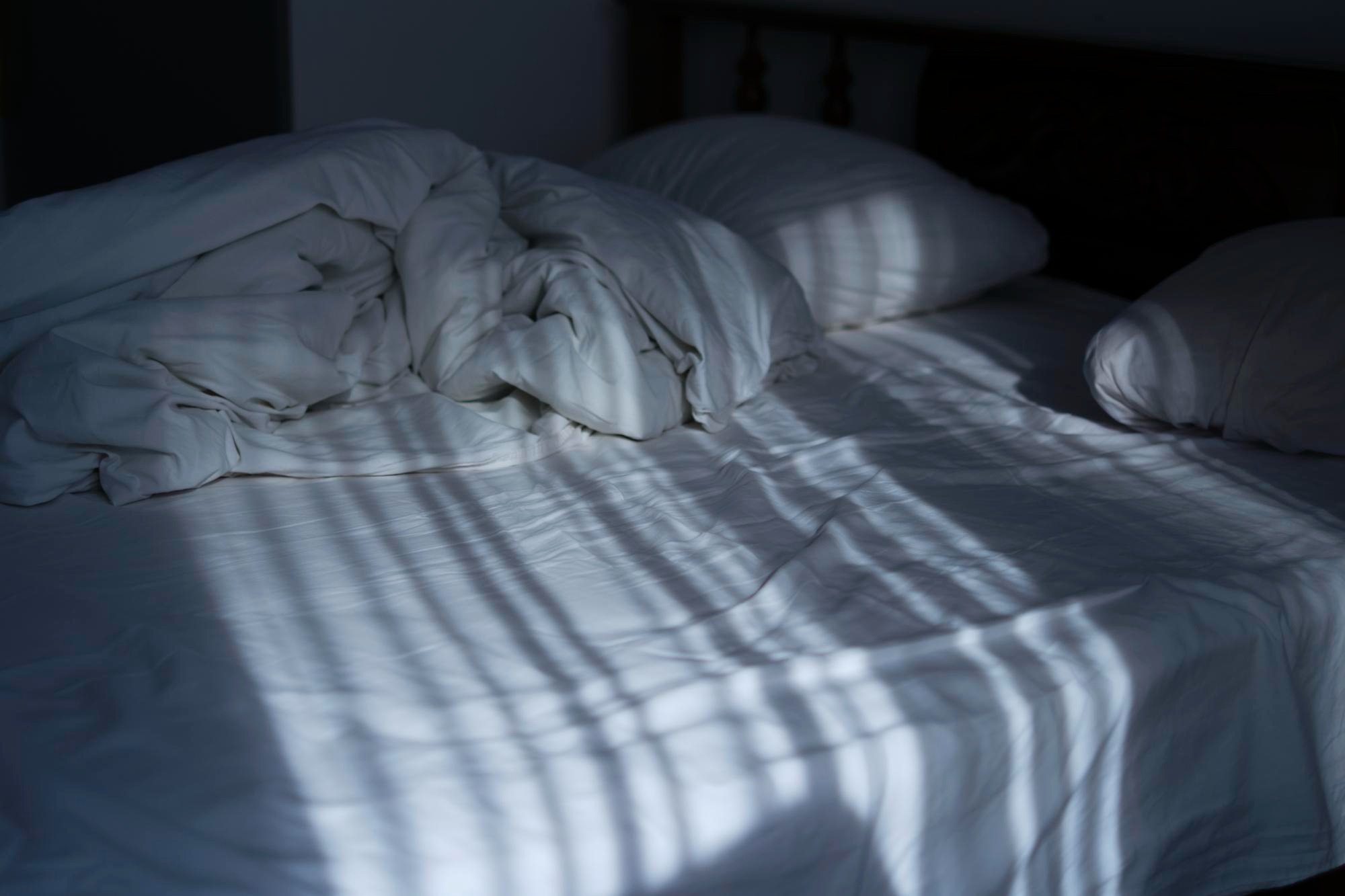
Natural fabrics breathe through the night, helping your body stay at just the right temperature for deep sleep.
What You Do During the Day Shapes Your Night
This is the part most sleep advice skips over. Deep sleep doesn’t just happen because you lie down — it’s earned across the whole day. A few consistent habits during daylight hours have a surprisingly direct effect on how deep your sleep gets.
Natural light in the first hour after waking anchors your circadian rhythm and helps your body produce deeper sleep later that night.
Regular physical activity — even a 30-minute walk — increases slow-wave sleep significantly. Your body sleeps deeper when it’s genuinely tired.
Caffeine has a longer half-life than most people expect. That afternoon coffee might still be active in your system well into the evening.
Going to sleep and waking up at the same time every day — weekends included — is one of the most powerful things you can do for deep sleep quality.
Elevated cortisol directly suppresses deep sleep. A short wind-down ritual, journaling, or even a brief walk can help lower that stress load before bed.
Large meals close to bedtime raise your core body temperature and keep your digestion active — both of which work against deep, restorative sleep.
Your Evening Wind-Down Routine Matters More Than the Sleep Itself
The hour before bed sets the tone for everything that follows. It’s not about following a rigid checklist — it’s about giving your nervous system a clear signal that the day is genuinely over.
Here’s why this works: your brain is associative. When you do the same calming things every evening, those actions start to act as a trigger. Over time, making herbal tea or dimming the lights begins to nudge your body toward the hormonal shifts that lead to deep sleep. The routine does the heavy lifting — you don’t have to try to sleep; you just have to create the right conditions for it to happen. The night routine guide walks through exactly how to build that.
A warm bath or shower about 90 minutes before bed
This one has real science behind it. A warm shower or bath raises your skin temperature, and the cooling that happens afterward mimics the natural drop in core temperature that signals sleep onset. It’s one of the few nighttime habits with strong research backing for improving deep sleep specifically, not just time to fall asleep.
It sounds simple, but it helps.
Wind down with something genuinely calming
Reading a physical book, gentle stretching, a short meditation, or simply sitting quietly with a warm drink — anything that doesn’t involve a screen and doesn’t require your brain to work hard. For a complete list of things that actually help in that window, see what to do before bed. The goal is to let your mind settle, not stimulate it further.
Surprisingly, the activity itself matters less than the consistency. Doing the same quiet things each night trains your body to respond to them.

A consistent wind-down — tea, soft light, a few quiet pages — teaches your body that deep sleep is on its way.
Worth noting
Screens don’t just disrupt sleep through blue light — the bigger issue is the mental stimulation. Scrolling, watching, responding to messages — all of it keeps your brain alert when it should be winding down. Even a 20-minute screen-free gap before bed makes a measurable difference.
When You Keep Waking Through the Night
Light, fragmented sleep is one of the most frustrating patterns because it can feel like you’re sleeping — technically you are — but you wake up feeling like you barely rested. Often the culprit isn’t something dramatic. It’s a room that’s too warm, noise you’ve stopped consciously noticing, or a stress response that keeps pulling you into lighter sleep stages.
Another thing worth checking: are you spending too long in bed relative to how sleepy you actually are? Counterintuitively, spending ten hours in bed when your body only needs seven tends to reduce sleep quality — making it lighter and more fragmented rather than deeper and more restorative. Slightly restricting your time in bed, and only going when you’re genuinely sleepy, often improves depth. If you regularly struggle to fall asleep once you’re in bed, that guide is worth reading alongside this one.
If none of that resonates and the fragmented sleep has been going on for months, it’s worth speaking to a doctor. Conditions like sleep apnoea — where breathing briefly stops during the night — are far more common than most people realise, and they directly suppress deep sleep without you being aware of it.
Deeper sleep isn’t something you force — it’s something you make room for. Cool the room, dim the lights earlier, move your body during the day, and give yourself a real wind-down. None of it is dramatic. All of it compounds. Start with one or two things tonight, and give them a couple of weeks. You might be surprised how different the morning feels.