

How to Sleep When You Work Night Shift (Schedule + Tips)
Your body clock is fighting you — and it’s winning. Here’s how to stop losing sleep to it and actually rest when everyone else is awake.
This article may contain affiliate links. If you buy through these links, we may earn a small commission at no extra cost to you.
There’s a strange kind of loneliness that comes with working nights. Not the bad kind — but the odd feeling of going to bed while the sun is climbing, hearing the neighbourhood come to life just as you’re trying to wind down, and waking up in the afternoon already feeling behind somehow.
Night shift sleep is genuinely one of the harder sleep problems to solve — not because the body can’t adapt, but because everything around you is designed for the opposite schedule. The light is wrong. The noise is wrong. Your family or housemates are on a completely different rhythm.
But the good news? Learning how to sleep when you work night shift is mostly about understanding why your body resists it — and then making a few deliberate changes that work with your biology instead of against it. It’s not complicated once you know what’s actually going on.

Creating the right sleep environment is half the battle when you’re sleeping against the natural light cycle.
Why Night Shift Sleep Feels So Hard
Your body has an internal clock — your circadian rhythm — that’s deeply tied to light. When sunlight hits your eyes in the morning, your brain reads that as a signal to stay awake and alert. Cortisol rises. Melatonin drops. Everything in your physiology pushes you toward being active.
When you work nights and try to sleep during the day, you’re fighting all of that at once. You’re asking your body to rest during the exact window it’s designed to be awake. That’s why night shift sleep often feels lighter, less refreshing, and harder to hold onto — even when you’ve done everything right.
The other issue is consistency. A lot of shift workers have rotating schedules or irregular days off. The body never quite gets a chance to settle into a pattern. You adapt slightly, then get yanked back the other way. That constant switching is exhausting on a level that goes deeper than just tiredness.
Understanding this isn’t just interesting — it’s practical. Once you know why it’s hard, the fixes stop feeling random and start making real sense.
The Night Shift Sleep Schedule That Actually Works
There’s no single perfect schedule, because shifts vary so much person to person. But the principles hold true regardless of your exact hours.
The biggest one: protect your anchor time. Pick a consistent sleep window and hold onto it as tightly as you can, even on your days off. Every time you switch back to nighttime sleeping “just for the weekend,” you reset the adaptation progress you’ve been quietly building. Your body needs repetition to shift its rhythm — and a couple of days of normal-schedule living is enough to undo it.
That’s hard. It requires real honesty with yourself about how you want to use your days off. But for most night shift workers, committing to a consistent anchor time is the single biggest thing they can do for their sleep quality.
A sample schedule — 11pm to 7am shift
| Time | What to do |
|---|---|
| 7:30am – 8:00am | Get home. Limit bright light on the commute — sunglasses or a hat help, especially in summer. |
| 8:00am – 8:30am | Wind-down routine. A light snack if needed, warm shower, no screens or blue-light filter on. |
| 8:30am – 9:00am | In bed. Room as dark and quiet as you can make it. |
| 9:00am – 4:30pm | Sleep window. Aim for 7–8 hours. This is your night — treat it like one. |
| 4:30pm – 5:00pm | Wake up. Get outside for some natural light if you can — a short walk helps reset your alertness signal. |
| 5:00pm – 8:00pm | Meals, errands, personal time. Eat a proper main meal during this window. |
| 9:00pm – 10:30pm | Pre-shift prep. A light snack if needed, get dressed, mentally switch on. |
| 11:00pm | Start of shift. |
Adjust the times to fit your actual shift. The structure matters more than the specific hours — a consistent anchor, a proper wind-down, and protecting the sleep block from disruption.
Managing Light — The Single Biggest Factor
Light is the switch your body uses to decide whether it’s time to be awake or asleep. If you’re trying to sleep at 9am and your bedroom is bright, your brain has a very hard time believing it’s nighttime — no matter how tired you are.
This is one of those areas where the environment does most of the work for you, if you set it up right.
On the way home from your shift
Avoid bright sunlight exposure on your commute home if you can. Your eyes don’t need much light to register “it’s morning” and start suppressing melatonin. Wearing sunglasses is a slightly ridiculous-looking trick that genuinely helps. In summer especially, this makes a noticeable difference in how quickly you can fall asleep when you get in.
In your bedroom
Blackout is non-negotiable. Even a thin line of light under the curtain is enough to disrupt sleep quality over a full 7-hour block. Proper blackout curtains or a quality sleep mask are both worth investing in for night shift workers specifically. The goal is a room that could pass for midnight at 10am.
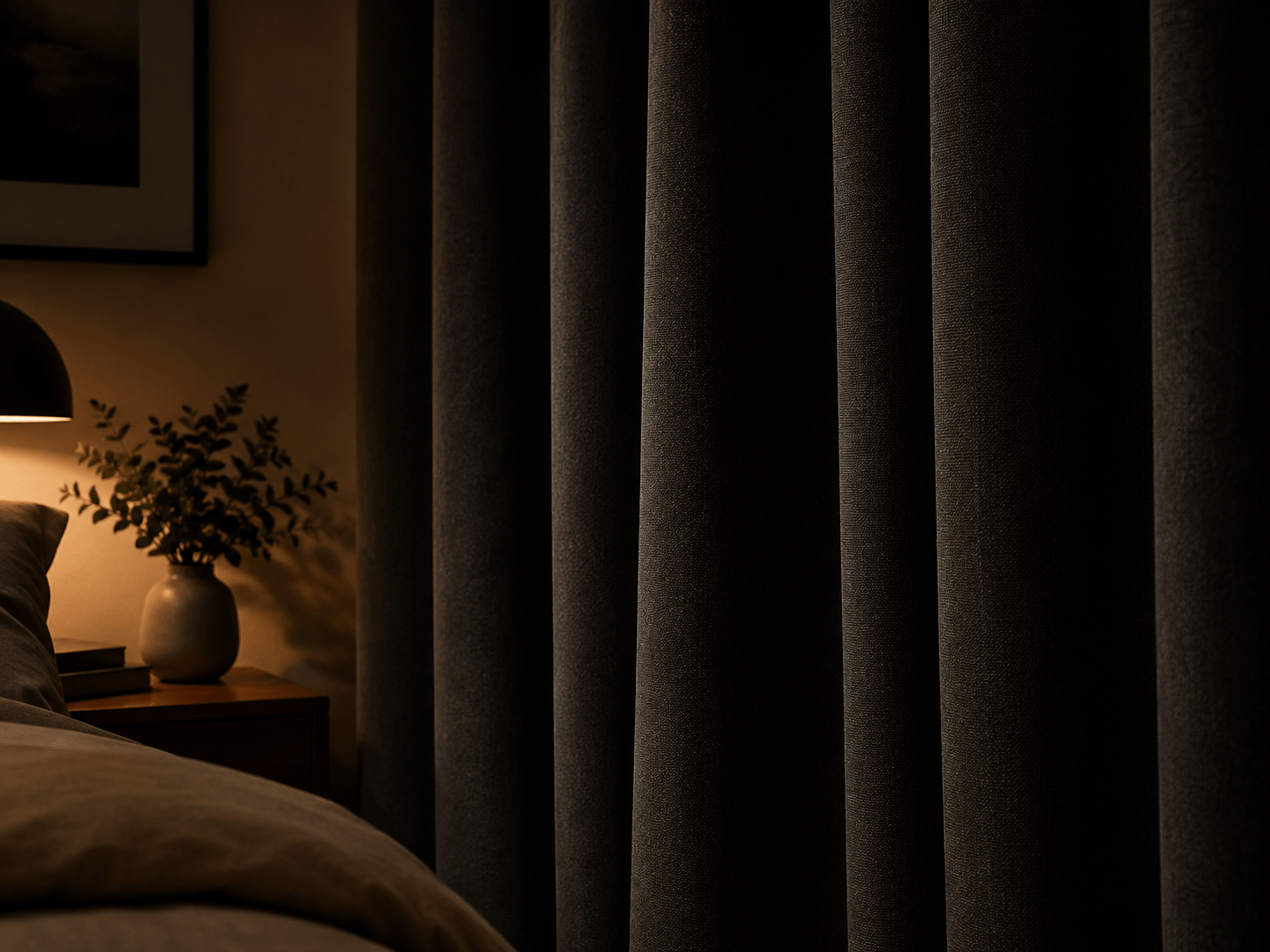
Blackout curtains aren’t a luxury for night shift workers — they’re a basic necessity.
Dealing With Daytime Noise
Light is the bigger issue, but noise is the one that wakes people up. A garbage truck at 11am, a neighbour’s lawn mower, kids coming home from school — these sounds hit your sleep during what would normally be a light phase, and they’re genuinely hard to sleep through.
A few things that help:
- A white noise machine — not to cover noise completely, but to create a consistent audio background your brain can tune out. The problem with daytime sleep isn’t usually loudness, it’s sudden changes in sound. Consistent white noise removes those spikes.
- Foam earplugs — simple, cheap, and surprisingly effective for light sleepers who aren’t bothered by the sensation.
- Communicating with your household — this sounds obvious but doesn’t always happen. Let people know your sleep window and what that actually means, not just “I might be sleeping.”
Running a dedicated white noise machine overnight tends to work better than a phone app left running — the sound is more consistent and you’re not risking a notification breaking through.
Worth knowing
A do-not-disturb sign on your bedroom door sounds silly until you realise how often someone knocks just to ask something that could wait three hours. If you live with family — especially kids — it helps to make the signal visible and obvious rather than just hoping people remember.
Your Wind-Down Routine After a Night Shift
Most people underestimate how much they need to decompress after a shift before they can sleep. You’ve been alert, dealing with decisions, running on adrenaline. Your nervous system needs time to shift gears.
Going straight from your car to your bed rarely works well, even when you’re exhausted. The physical tiredness is there — but the mental alertness doesn’t switch off that quickly.
A short wind-down of 20 to 30 minutes after getting home makes a real difference. It doesn’t need to be elaborate:
- A warm shower — the temperature drop after you get out triggers drowsiness naturally
- Something small to eat if you’re hungry, not a full meal
- Dim the lights in your home as soon as you walk in
- Screens off, or blue-light filter enabled at minimum
- A few quiet minutes with a book or a cup of herbal tea

A gentle 20-minute wind-down helps your nervous system shift from alert to ready for rest.
Herbal teas — chamomile, lemon balm, passionflower — are genuinely calming without any stimulant effect. They make a good ritual anchor for the end of your “work day,” the same way a morning coffee marks the start of it for most people. A sleep-support herbal tea blend is a simple, low-effort addition worth keeping in the cupboard.
How to Sleep on Night Shift: 8 Tips at a Glance
Here’s a clear overview of the habits that make the biggest difference for shift workers. Some of these you can start tonight. Others take a couple of weeks of consistency to fully settle in — but they’re all worth building.
Set a fixed sleep window
Pick a consistent time to sleep and wake — even on days off — and protect it. The body adapts through repetition. Shifting your anchor resets the clock before it can settle.
Block all light from your bedroom
Blackout curtains or a well-fitted sleep mask are essential. Even small amounts of morning light suppress melatonin and make it much harder for your brain to stay in deep sleep.
Wear sunglasses on the commute home
Limiting bright light exposure after your shift helps preserve the melatonin still in your system. Especially useful in summer when it’s fully daylight at 7am.
Add white noise
Consistent background sound reduces the sleep-disrupting effect of sudden daytime noises. A dedicated machine works better than a phone app for all-day consistency.
Do a proper wind-down
Give your nervous system 20 minutes to shift from “on” to “off” after the shift ends. Warm shower, dim lights, screens down. The difference in how fast you fall asleep is real.
Keep your bedroom cool
Your body temperature drops naturally during sleep. In summer, daytime heat fights this process. A fan, cool-side pillow, or lighter bedding helps your body do what it needs to.
Watch your caffeine cut-off
Caffeine has a half-life of around 5–6 hours. A coffee at 3am is still partially active at 8am. Stop caffeine at least 6 hours before your planned sleep time.
Use a short nap before your shift
A 20-minute nap in the early evening — before your shift, not after your main sleep — can sharpen alertness without disrupting the main block. Keep it short to avoid deep sleep.
Setting Up Your Bedroom for Daytime Sleep
Your bedroom is doing more work than usual when you’re a shift worker. For everyone else, it just needs to be dark and quiet at night. For you, it has to fight the entire world outside the window.
Temperature
Warmer daytime temperatures make it genuinely harder to sleep deeply. A fan or air conditioning makes a measurable difference in sleep quality during summer shifts. If those aren’t options, lighter bedding and sleeping in cooler clothing helps. A cooling pillow is also worth considering — it’s a small change that some people find makes a noticeable difference to how settled they feel through the night.
Bedding and support
How comfortable your bed actually is matters more when you’re fighting your body clock. When everything else is working against restful sleep, a supportive mattress and the right pillow firmness for your sleep position take some friction out of the equation. A memory foam pillow suited to how you sleep is a low-cost upgrade worth making.
Phone and notifications
Put your phone on do-not-disturb. Actually do it, not just silent — because vibrations and screen flashes still register and can pull you out of light sleep. Let your contacts know your schedule. Most things can wait seven hours.
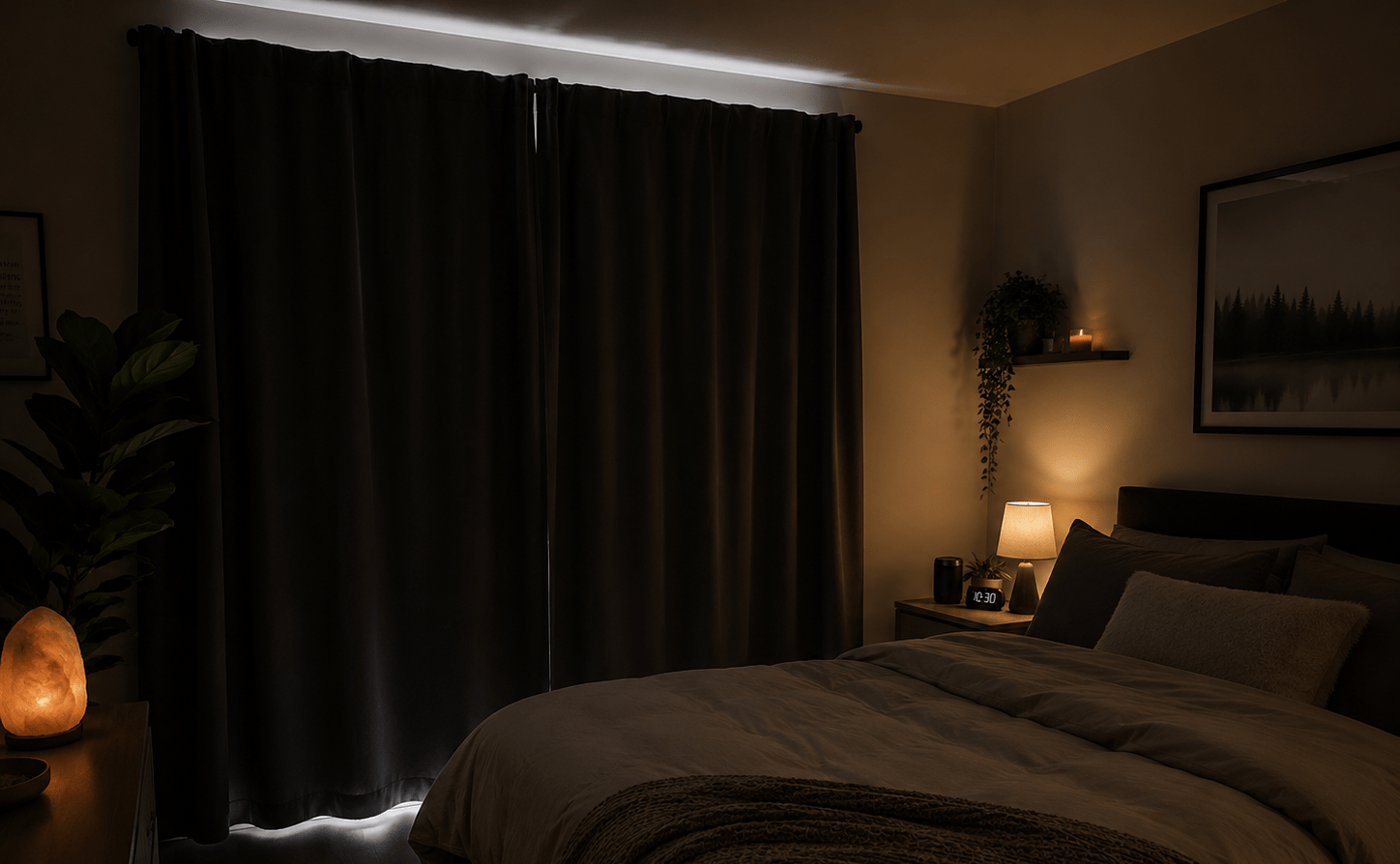
A few targeted bedroom upgrades make daytime sleeping feel far more like the real thing.
Days Off — The Hardest Part of Night Shift Sleep
Here’s the uncomfortable truth: days off are where most shift workers quietly undo their progress without realising it.
You finish your last night, and it feels natural to switch back to a normal schedule — stay up until midnight, wake up at 8am, feel like a regular human for a couple of days. And if you only work nights occasionally, that might be fine. But if nights are your regular schedule, that two-day flip is making your next run of shifts much harder than it needs to be.
The body needs at least two to three days to meaningfully shift its rhythm. Switching back and forth more often than that means you’re essentially in permanent jet lag — never fully adapted to either schedule.
Practical approach
On days off, try a compromise sleep window rather than a full reversal. If you normally sleep 9am–4pm on work days, try shifting to midnight–7am on days off rather than jumping to a completely normal daytime schedule. It’s not perfect, but it’s far less disruptive than a full reset — and your body will thank you when you go back to nights.
It also helps to get some natural light exposure in the late afternoon on your days off, which nudges your alertness peak toward the evening and aligns better with your work schedule.
Which Changes Should You Start With?
The simplest way to decide is to match the fix to what you already notice about your sleep. Here are the most common situations — and the best place to start for each.
Wind-down routine + light control
If you lie awake for a long time after getting home, your nervous system is still “on.” A 20-minute wind-down and a fully dark room tackle both sides of the problem.
Blackout curtains or sleep mask
If you’re falling asleep fine but waking after 4–5 hours, rising light levels are the most likely culprit. Blackout is the first thing to fix.
Shop blackout curtains →White noise + bedroom temperature
If you’re sleeping but waking frequently, sudden noises and daytime warmth are the most common causes. A white noise machine and a cooler room address both.
Shop white noise machines →Fix the anchor first
If you have no consistent sleep window yet, that’s the first thing. A stable anchor time — held even on days off — builds everything else on a solid foundation.
When Night Shift Sleep Still Isn’t Improving
If you’ve tried the basics — consistent sleep window, blackout room, a proper wind-down — and you’re still sleeping poorly after several weeks, it’s worth looking a little further.
Chronic sleep deprivation from shift work is a real thing with real effects on mood, focus, immune function, and long-term health. It’s not something to just push through indefinitely.
- Talk to your doctor about melatonin timing. Small, well-timed doses can help shift your body clock — but timing matters a lot. It’s not a sleeping pill; it’s a rhythm signal. A doctor familiar with shift work can advise on how to use it properly.
- Check for sleep disorders. Night shift workers have a higher rate of sleep apnea than the general population, partly because disrupted sleep makes any underlying issue more visible. If your sleep is consistently poor and you wake up unrefreshed, it’s worth a conversation with your doctor.
- Talk to your employer if your schedule is rotating. A stable, predictable pattern is far easier on the body than random or frequently changing shift times. Some employers are more flexible about this than people expect.
Worth noting
None of the tips in this article are a substitute for medical advice. If your sleep issues are severe, persistent, or coming with other symptoms like morning headaches or significant daytime fatigue, it’s always worth mentioning to a doctor rather than trying to solve it alone.
Night shift work asks a lot from your body — and from your patience. It asks you to rest when the world is awake, to sleep through sunshine and noise, to hold a rhythm that runs opposite to almost everyone around you. That’s genuinely hard, and there’s no point pretending otherwise. But it’s manageable. Start with the room. Blackout and white noise make a bigger difference than most people expect. Add a consistent wind-down. Protect your sleep window even on days off when you can. Small, deliberate changes stack up quietly over time — and even a week of more consistent sleep makes the whole rhythm of night shift life feel a little less like a fight.