

How to Fall Asleep Faster: Simple Habits That Stop the Racing Mind
We’ve all been there. Lying in bed, completely exhausted, while your brain decides this is the perfect time to run through tomorrow’s to-do list, reheat old worries, and ask big philosophical questions.
This article may contain affiliate links. If you buy through these links, we may earn a small commission at no extra cost to you.
The clock keeps ticking. You start doing that painful math — “if I fall asleep right now, I’ll still get six hours” — and somehow that just makes it worse. The more you try to force sleep, the further away it feels.
Here’s the thing: falling asleep faster isn’t about willpower. It’s about setting the right conditions so your body feels ready, safe, and calm enough to let go on its own. Most of what makes that happen is simpler than you’d expect — and a lot cozier, too.

A quiet moment in bed — journaling before sleep is one of the simplest ways to clear your mind.
Why Falling Asleep Feels So Hard Sometimes
Before jumping into fixes, it helps to understand what’s actually going on. Sleep isn’t something you can switch on like a light. It happens when two systems in your body line up: your sleep pressure (how long you’ve been awake and how physically tired you’ve become) and your circadian rhythm (the internal clock telling you when night has arrived).
When those two things are in sync, drifting off feels almost effortless. When they’re not — because of stress, bright screens, an irregular schedule, or a restless mind — your body doesn’t receive the signal clearly enough to make the switch.
The tricky part is that trying harder doesn’t help. The more you focus on falling asleep, the more alert your brain becomes. What actually works is creating an environment — physical and mental — where sleep can arrive naturally.
Start Winding Down Before You Even Get Into Bed
This is the part most people skip. They go from full-speed activity to lying in the dark and wonder why sleep doesn’t come. But your body needs a transition — a gentle runway into rest, not a sudden stop.
Think of the hour before bed as a buffer zone. Not a productive hour, not a scrolling hour. Just a quiet, low-stimulation stretch of time that tells your nervous system the day is ending. For a full guide to what this hour can look like, see what to do before bed.
Dim the lights earlier than feels necessary
Light is one of the most powerful signals your body clock responds to. Bright overhead lighting in the evening tells your brain it’s still daytime, which delays the release of melatonin — the hormone that makes you feel sleepy. Switching to a warm, dim lamp about an hour before bed makes a genuine difference, even if it seems almost too small to matter.
A soft lamp on the nightstand, a candle, or even just turning off the harsh main light can shift the whole atmosphere of a room. Your body notices, even when your mind doesn’t consciously register it.
Natural fabrics like linen breathe better through the night — and they feel beautiful to climb into.
Cool the room down slightly
Your core body temperature naturally dips as you fall asleep, and a slightly cool bedroom helps that process along. Most people sleep best when the room sits somewhere between 16 and 19°C (60–67°F). If it’s too warm, your body struggles to make that temperature drop — and you end up restless without knowing quite why. A cool room is also one of the most direct ways to encourage deeper sleep overall.
Cracking a window, running a quiet fan, or lowering the thermostat a couple of degrees before bed is one of those small changes that feels surprisingly impactful once you try it.
Worth trying
Dim your lights and cool your room about an hour before bed. These two changes alone — consistent, simple, free — are among the most well-supported ways to help your body shift naturally into sleep mode.
Build a Routine Your Body Can Recognise
Here’s why bedtime routines work so well: repetition creates association. When you do the same sequence of calming things each evening, your brain starts treating those actions as a cue that sleep is coming. Over time, even just putting on your pajamas or brewing a cup of herbal tea can trigger a gentle drop in alertness.
You don’t need anything elaborate. A warm shower, a few pages of a book, some light stretching — done consistently, these habits become more powerful than any single technique. What most people don’t realize is that the routine itself is doing the work, not just the individual actions within it. For a step-by-step structure, the before bed routine guide lays it out simply.
A warm shower about 90 minutes before bed
This one has a nice bit of science behind it. A warm shower raises your skin temperature, and as you step out and cool down, your body temperature drops — which mimics the natural cooling that happens as you fall asleep. Your brain reads it as a sleep cue. It also just feels like a lovely way to mark the end of the day, which is reason enough on its own.
Put the phone in another room
The light from screens suppresses melatonin and tricks your brain into thinking it’s still mid-afternoon. But honestly, the bigger issue is the stimulation itself. Notifications, news, social feeds, messages that feel like they need replies. Even when you’re passively scrolling, your brain is actively processing and reacting. It simply can’t wind down while it’s still being fed input.
Leaving your phone in another room removes the temptation entirely. A simple bedside alarm clock handles the wake-up part without any of the late-night scroll risk.

A real alarm clock means your phone stays out of the bedroom — one of the simplest sleep upgrades you can make.
Your Sleep Environment Matters More Than You Think
No amount of good habits will fully compensate for a bed that isn’t comfortable or a room that isn’t set up for rest. Your environment shapes how quickly you fall asleep and how deeply you stay there — so it’s worth paying a little attention to. For a deeper look at how your bedroom affects sleep quality as a whole, that guide covers it thoroughly.
Bedding that actually suits you
The right sheets, pillow, and duvet combination is genuinely personal. Some people run warm and need breathable linen or bamboo fabrics. Others love the weight of a thick duvet and sleep better for it. If you regularly find yourself too hot, too cold, or waking up with a stiff neck, those are signals worth listening to.
Natural fabrics tend to regulate temperature better than synthetics, which is why cotton, linen, and bamboo come up so often in sleep conversations. Layering gives you flexibility — a lighter blanket on top of a sheet means you can adjust without fully waking up.
The mattress question
It’s easy to overlook because we get used to our beds over time. But if your mattress is older than eight or ten years, or if you regularly wake up with aches, it might be quietly working against you. The right firmness depends on how you sleep: side sleepers generally do better with something softer that lets the hips and shoulders sink in slightly, while back sleepers often need more support through the middle. If back discomfort is part of the problem, it’s worth reading about the best way to sleep with lower back pain — the right position alone can make mornings feel very different.
You spend roughly a third of your life on it. Getting it right is one of the higher-return changes you can make for your rest.

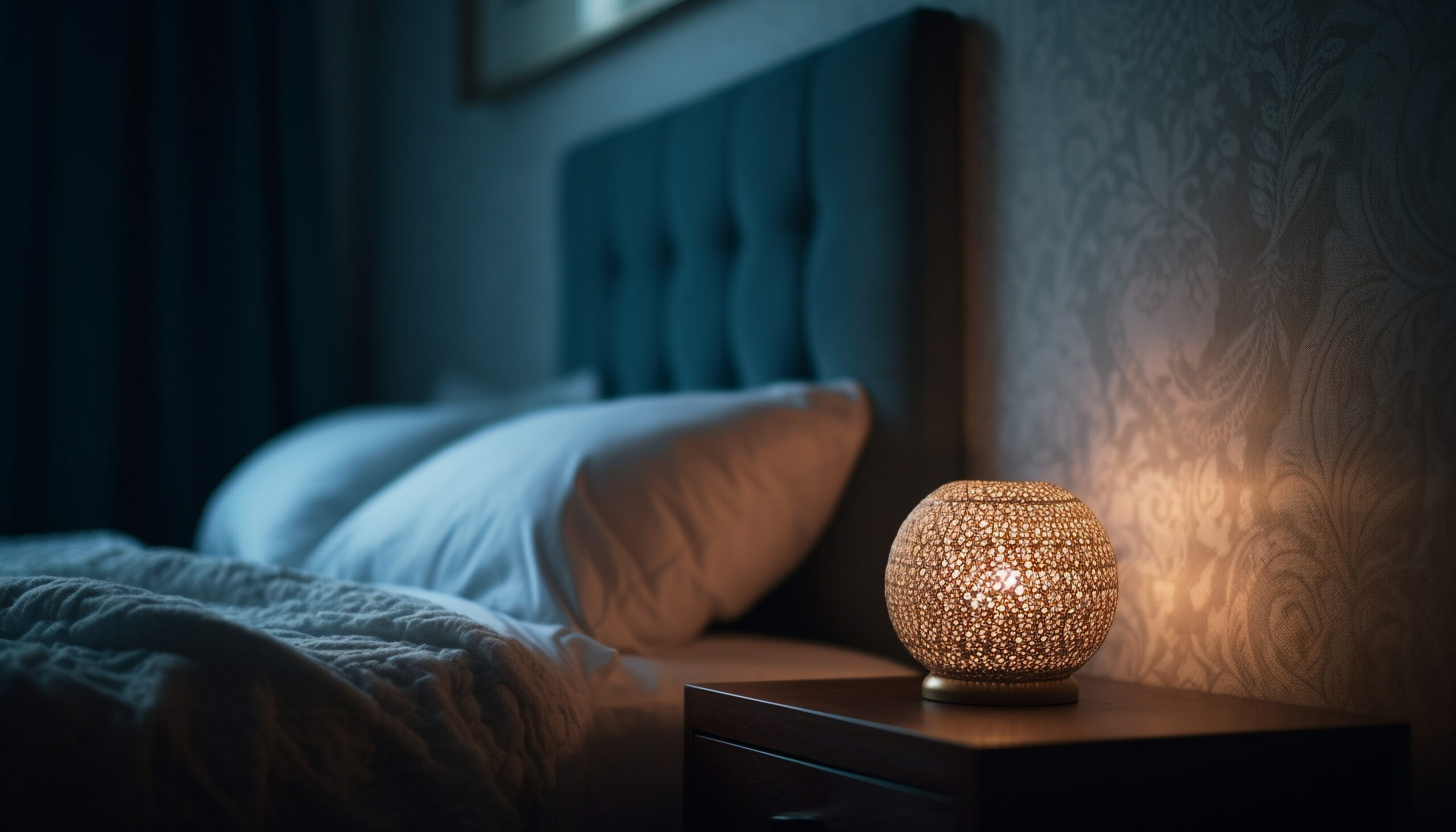
Warm, dim lighting close to bedtime is one of the easiest signals you can give your body that the day is winding down.
When Your Mind Won’t Slow Down
A tired body paired with a busy mind is one of the most common sleep obstacles there is. You’re physically ready for rest, but thoughts keep arriving — tomorrow’s tasks, lingering worries, half-formed plans. This is where a few targeted techniques can make a real difference.
The 4-7-8 breathing method
Breathe in quietly through your nose for four seconds. Hold for seven. Exhale slowly through your mouth for eight. Repeat four or five times. It sounds almost too simple, but it works by activating your parasympathetic nervous system — the part responsible for rest and recovery. Your heart rate slows, your muscles release tension, and that persistent hum of alertness begins to fade. Most people feel a noticeable shift within the first two or three cycles.
Write it down before you lie down
If your mind tends to spin through responsibilities the moment your head hits the pillow, try a brief “brain dump” earlier in the evening. Spend five minutes writing down everything sitting on your mental plate — tasks, worries, things you don’t want to forget. Once it’s on paper, your brain no longer needs to hold onto it. It’s a small act with a surprisingly freeing effect.
Read something calm and undemanding
A gentle novel, a slow essay, something with no urgency to it. Reading shifts focus from internal chatter to an external narrative, and that subtle redirection is often enough to let tiredness take over. The key is keeping it easy — nothing that pulls you in so completely that you’re fifty pages deeper than you planned at 1am.

A candle, a blanket, a good book — the kind of evening that makes sleep feel like something you look forward to.
Good to know
If you’ve been lying awake for more than twenty minutes, get up. Keep the lights low, do something quiet in another room, and return to bed only when you feel genuinely sleepy again. Staying in bed while frustrated trains your brain to associate your bed with wakefulness — the opposite of what you want.
The Small Daily Habits That Shape Your Nights
Sleep quality is built across the whole day, not just in the final hour before bed. A few consistent habits — none of them complicated — tend to make a quiet but cumulative difference over time. For the full picture of how daily habits improve sleep from morning through evening, that guide is worth reading alongside this one.
Caffeine has a half-life of around five to six hours. That afternoon coffee may still be affecting you well into the evening.
Waking up at the same time every day — even on weekends — anchors your circadian rhythm more than almost anything else.
Natural light within the first hour of waking tells your body clock it’s daytime — which helps it know when nighttime should arrive.
A heavy meal close to bedtime keeps your digestive system active when your body is trying to shift into rest mode.
Regular movement — even a daily walk — builds sleep pressure and helps you fall asleep faster and more deeply each night.
Even twenty minutes of calm, screen-free time before bed signals your nervous system that it’s safe to let go. A consistent night routine makes this effortless over time.
When Nothing Seems to Work
Some nights, despite doing everything right, sleep just doesn’t arrive. That happens to everyone, and the occasional restless night isn’t cause for concern. The worst response is to lie there watching the clock, because that frustration feeds the very alertness keeping you awake.
If it’s been more than twenty minutes, get up quietly. Sit somewhere dim and calm, sip some herbal tea, read a little. Return to bed when you feel the pull of tiredness again. It feels counterintuitive, but it works — and it keeps your bed firmly associated with sleep rather than with the discomfort of lying awake.
If poor sleep has become a persistent pattern rather than an occasional rough night, it’s genuinely worth talking to a doctor. Things like sleep apnea, anxiety, or certain nutritional deficiencies can all show up as difficulty falling or staying asleep — and none of them resolve on their own.
Falling asleep faster rarely comes from one dramatic change. It’s the gentle accumulation of small things — a cooler room, a quieter hour, a bed you actually love being in. Start with one or two tonight. Give them a little time. Sleep has a way of returning when you stop chasing it.