
Camping Mattresses Explained: How to Choose the Right One
Two campers, same trip, same weather. One wakes up rested and ready to hike. The other barely slept, sore and cold. Most of the time, the difference is what they were lying on.
Shopping for a camping mattress can feel weirdly complicated. Self-inflating, air, foam, ultralight, R-values, thickness ratings — it’s a lot of jargon for something you just want to lie down and sleep on. And once you start reading reviews, everyone seems to swear by something different.
Here’s the truth: there’s no single best camping mattress for everyone. The right one depends on how you camp, where you go, and how warm or cold a sleeper you are. Once you understand the few things that actually matter, the choice gets a lot simpler.
So let’s walk through it — what the numbers mean, how the main types compare, and how to match a mattress to the kind of camping you actually do. (If you want the full picture on resting well outdoors, start with our guide on how to sleep comfortably while camping.)
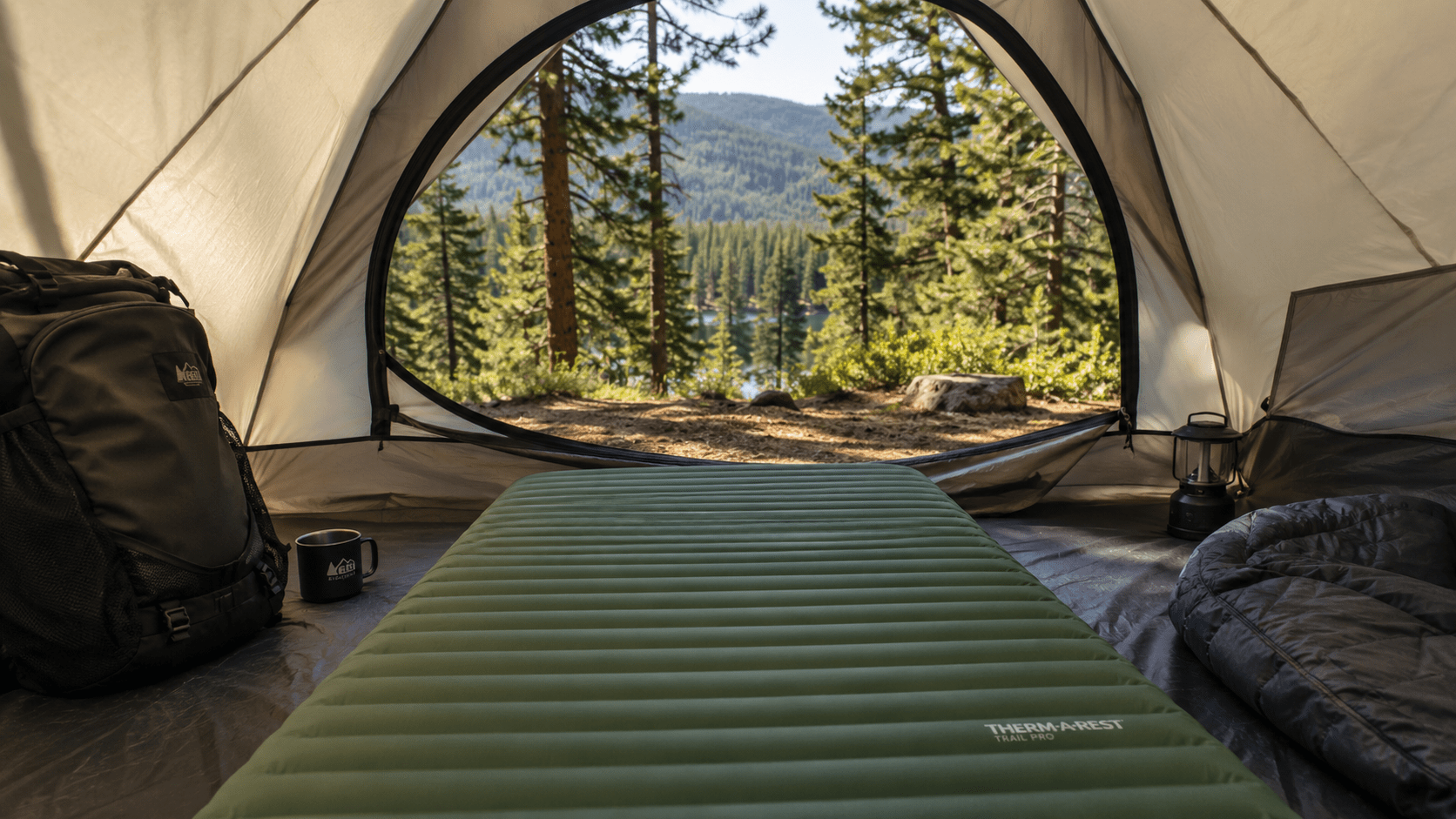
The right mattress is what stands between you and a cold, lumpy night.
The one number that matters most: R-value
If you only learn one piece of camping mattress jargon, make it this. R-value measures how well a mattress insulates you from the cold ground. The higher the number, the more it holds your body heat in.
Most beginners shop by thickness, assuming a thicker pad means a warmer one. Not quite. A plush air mattress can leave you freezing while a thin foam pad keeps you cozy — because warmth comes from insulation, not height off the ground. The ground is constantly pulling heat out of you, and R-value is what stands in the way.
A rough guide to go by:
- R-value 1–2: Warm summer nights only.
- R-value 3–4: A safe all-rounder for spring through fall.
- R-value 5+: Cold weather and chilly nights, when the ground really bites.
R-values stack. If your pad isn’t warm enough for a cold night, you can lay a cheap foam pad underneath it and add the two together. It’s a simple trick that saves you buying a whole new mattress.
The three main types of camping mattress
Nearly every camping mattress falls into one of three families. Each one trades something off — comfort, warmth, weight, or fuss — and knowing those trade-offs is really the whole game.
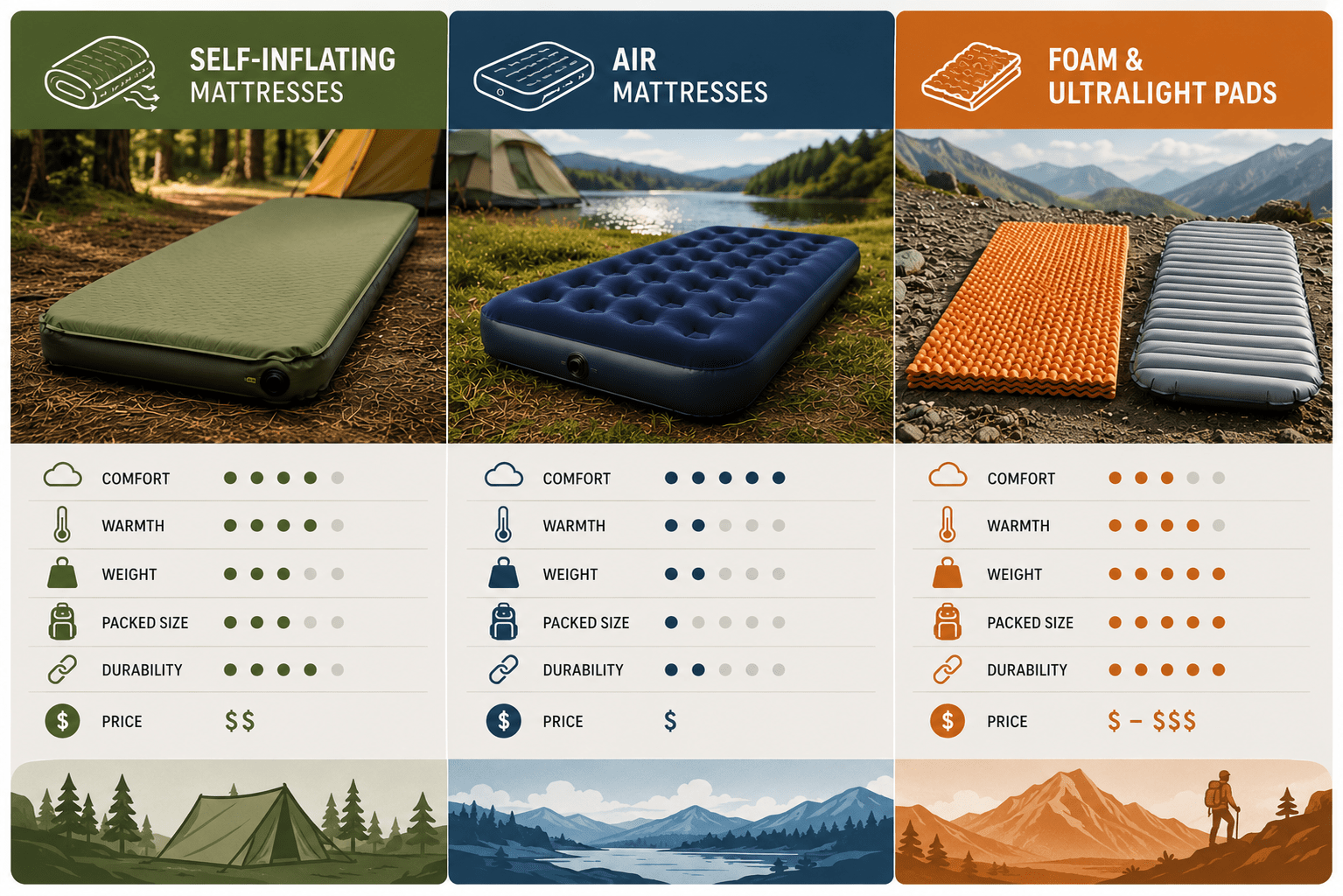
Self-inflating, air, and foam — each one trades off something different.
Self-inflating mattresses
These are the easygoing middle ground, and the type most campers end up happiest with. Open the valve and the foam inside expands and pulls in air on its own, so setup is almost hands-free. You top it off with a few breaths and you’re done.
They strike a lovely balance — comfortable, well-insulated, and reliable without much fuss. They pack down bigger than ultralight options and weigh a bit more, but for car camping and casual trips, that rarely matters. If you want one mattress that just works in most situations, a self-inflating camping mattress is the safe bet.
Air mattresses
This is the closest thing to your bed at home — thick, bouncy, and genuinely comfortable. You inflate it with a pump (or a built-in one), and you’re sleeping several inches off the ground, which a lot of people love.
The catch is warmth. That big pocket of air inside doesn’t insulate well, so on a cold night an air mattress can feel chilly from below even with a warm sleeping bag. They’re at their best for warm-weather car camping, where comfort is the priority and you’re not far from the car. Slip a blanket or foam pad underneath if the temperature drops.
Foam and ultralight pads
These are for campers who count every ounce — backpackers and hikers especially. Closed-cell foam pads are nearly indestructible, never go flat, and weigh almost nothing. Ultralight inflatable pads pack down to the size of a water bottle while still offering decent warmth.
The trade-off is comfort. Foam pads are thin and firm, so they’re less plush than the other two. But when you’re carrying everything on your back for miles, that featherweight feel is worth far more than a little extra cushion. An ultralight sleeping pad is the natural pick here.
How they compare at a glance
Here’s the quick version, side by side, so you can see the trade-offs all at once.
| Type | Best for | Trade-off |
|---|---|---|
| Self-inflating | Most campers, all-round use | Bulkier and a bit heavier |
| Air mattress | Warm-weather car camping | Cold from below; needs a pump |
| Foam / ultralight | Backpacking, counting grams | Firmer, less cushioned |
How to match the mattress to your trip
Forget the “best” mattress idea for a second. The better question is which one fits how you actually camp. A few quick scenarios make it click.
You drive to the campsite
Weight doesn’t matter, so chase comfort. A thick air mattress or a plush self-inflating pad will feel almost like home.
You hike to camp
Every gram counts. An ultralight inflatable or foam pad keeps your pack light without leaving you on bare ground.
You camp in the cold
Warmth wins. Prioritize a high R-value over plushness, and layer a foam pad underneath if needed.
You’re a side sleeper
Your hips and shoulders need room to sink. Go thicker — at least three inches — so you don’t press into the ground.
Whatever you pick, inflate it a little softer than feels right at first. An overfilled pad is firm and bouncy, and it pushes back against your hips and shoulders all night. A touch of give is what makes it feel cozy.
A few mistakes worth avoiding
Most camping sleep regrets trace back to the same handful of slip-ups. Easy to dodge once you know them.
- Ignoring R-value. The most common one. A comfy pad with no insulation still leaves you cold.
- Overinflating. A rock-hard mattress is less comfortable, not more. Leave a little softness.
- Skipping a groundsheet. A thin footprint under your tent protects your pad from sharp rocks and roots.
- Buying on thickness alone. Height off the ground feels luxurious, but warmth and fit matter more.
So, which one should you get?
If you want a simple answer: a self-inflating mattress suits most people most of the time. It’s comfortable, warm enough for three seasons, and easy to live with. Backpackers should lean ultralight, and warm-weather car campers can happily go for a thick air mattress.
But really, the best camping mattress is just the one that matches your trip and keeps you warm off the ground. Get that part right, and the rest of a good night outdoors falls into place. For everything else that goes into resting well in a tent, our guide on sleeping comfortably while camping covers the warmth, light, and noise side of things.
The right mattress disappears beneath you. You stop noticing the ground, the cold, the lumps — and just sleep, the way camping was always meant to feel.