
15 Airplane Sleeping Hacks Frequent Flyers Swear By
Frequent flyers don’t sleep on planes because they’re lucky. They sleep because they’ve quietly figured out the tricks — and most of them cost nothing.
Some people board a plane, settle in, and are asleep before the safety demo finishes. The rest of us spend the flight shifting around, half-dozing, and stepping off feeling like we’ve been awake for a week.
The difference usually isn’t some special talent for sleeping anywhere. It’s a collection of small airplane sleeping hacks that frequent travelers have picked up over hundreds of flights — little adjustments to what they pack, where they sit, and how they settle in. None of them are complicated, and most are free.
Here are fifteen of the best, grouped by when you’ll use them. (If you want the full walkthrough, our complete guide on how to sleep on a plane covers the whole routine start to finish.)
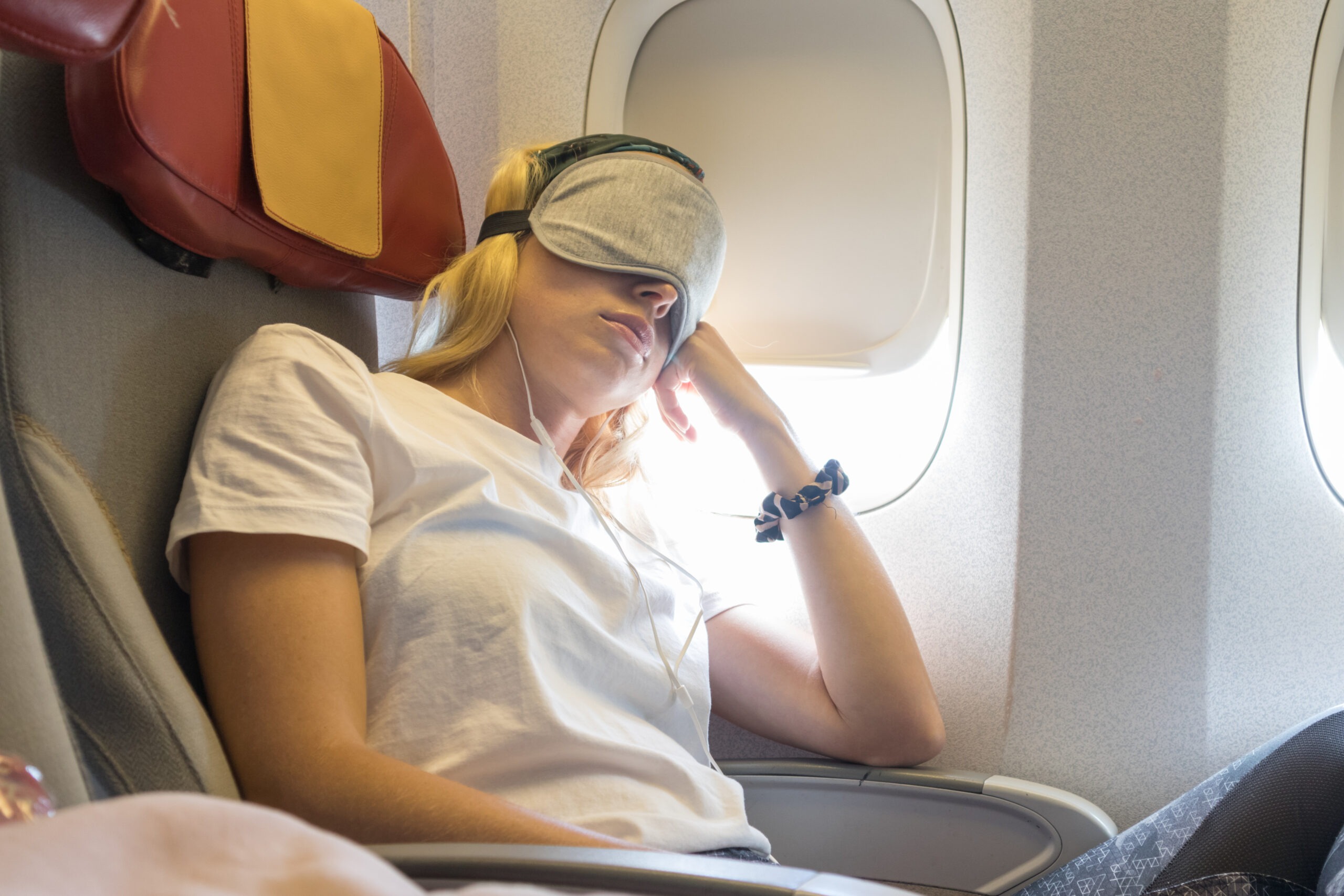
The best in-flight sleepers all rely on the same handful of small tricks.
Before you even board
Half the battle is won on the ground. These are the moves seasoned travelers make before they ever step onto the plane.
Book the window seat
It gives you a wall to lean on, control over the shade, and no one climbing over you mid-nap. For sleep, it beats every other seat on the plane.
Sit ahead of the wing
Seats toward the front ride smoother and stay quieter, away from the engine noise and the constant traffic around the rear galley.
Dress in soft layers
Cabins run cold and unpredictable. Loose, cozy layers let you adjust without waking up, and slip-off shoes make a world of difference.
Cut caffeine early
That airport coffee can linger for six hours or more. Switch to water a few hours before your flight so your body’s ready to wind down.
Your in-flight sleep kit
A few small items do the heavy lifting here, each one removing a single obstacle between you and real rest. You don’t need all of them — but the right pieces turn a cramped seat into something you can actually sleep in.
Pack a real neck pillow
A memory-foam pillow keeps your head from dropping forward and jolting you awake — the single most common reason people can’t sleep sitting up. This kind of travel pillow does the job.
Bring a contoured eye mask
Light is the biggest signal telling your brain to stay awake. A molded mask blocks it completely without pressing on your eyes. A good eye mask folds flat into any bag.
Use noise-cancelling earbuds
They turn the engine roar into a soft hush so your nervous system can settle. Compact noise-cancelling earbuds tuck right into a pocket.
Wear compression socks
Long sitting leaves legs stiff and swollen, which makes getting comfortable harder. Light compression socks keep blood moving.
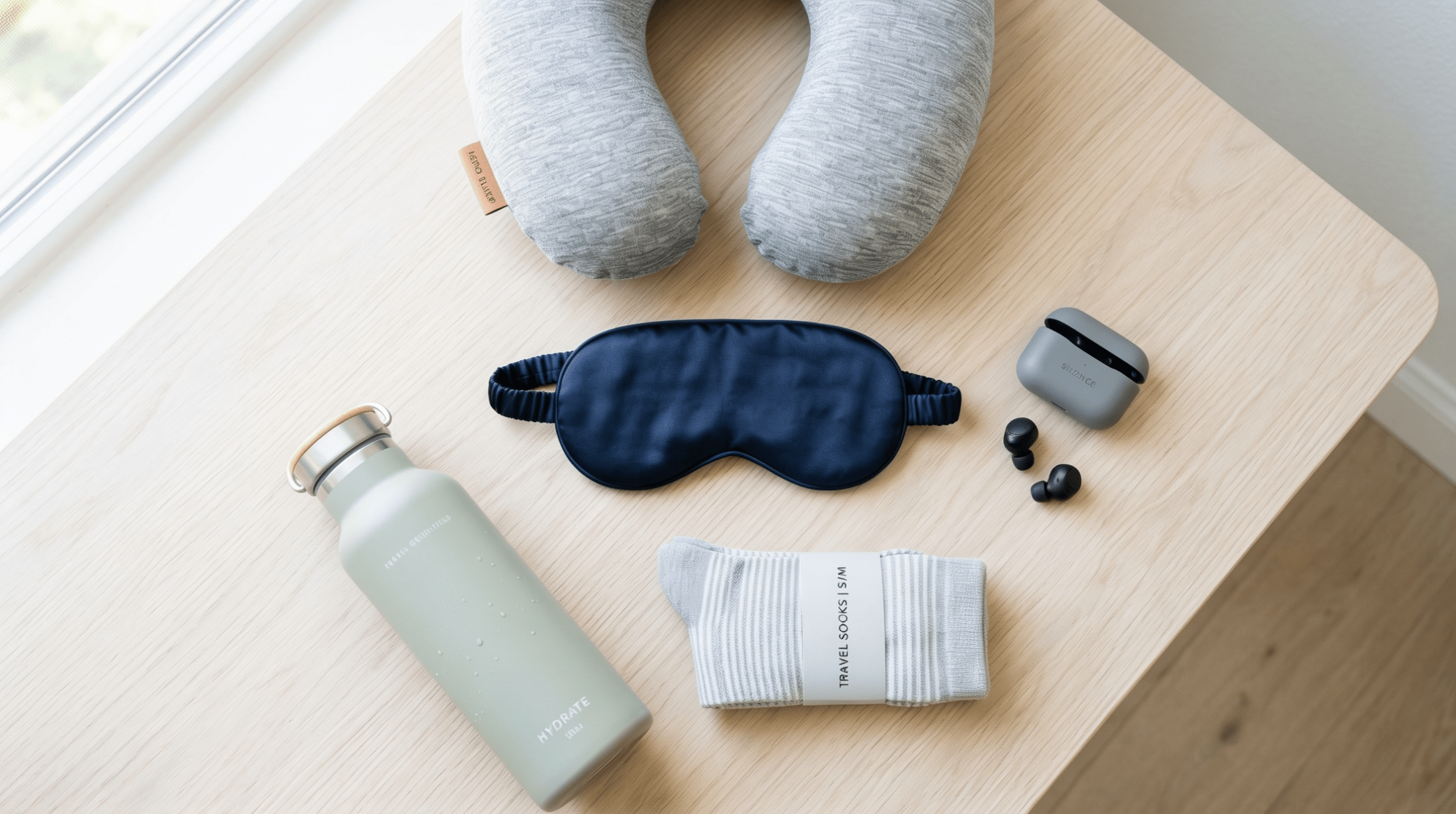
A pocket-sized sleep kit is the frequent flyer’s secret weapon.
Once you’re in your seat
Now it’s about how you set up your little pocket of space. These are the adjustments that take you from “sitting upright” to “actually able to drift off.”
Recline early
Recline the moment it’s allowed, before your neighbor settles in. Even a few inches takes real pressure off your lower back.
Buckle over the blanket
Fasten your seatbelt on the outside of your blanket. Then the crew won’t need to wake you to check it during turbulence.
Support your lower back
Tuck a rolled blanket or small cushion behind your lumbar curve so you don’t slowly slump forward as you relax.
Prop up your feet
Resting your feet on a bag under the seat in front lifts your knees slightly and eases the strain of a long flight.
The buckle-over-the-blanket trick is the one experienced travelers swear by most. Nothing ruins a good in-flight nap like being gently shaken awake so a crew member can confirm you’re strapped in.
Staying asleep through the flight
Falling asleep is one thing — staying asleep through meal service, turbulence, and the cart rolling past is another. These last few hacks help you ride it out.
Set the mood early
Mask on, earbuds in, screen off well before you actually want to sleep. Giving your brain the cues early helps it follow along.
Breathe yourself down
A few minutes of long, slow exhales tells your nervous system the flight is a safe place to rest — and quiets a racing mind.
Stop watching the clock
Tracking the map and counting the hours left only makes sleep feel further away. Let go of the timeline and let rest come on its own.
You don’t have to use all fifteen on your next flight. Pick three or four that sound most like the problems you actually run into, try them out, and add more as you go. A few flights in, they’ll feel automatic — the same way they do for the people who always seem to land looking fresh.
Want to dial in the details? Our guide to the best airplane sleeping positions breaks down exactly how to hold your body once the lights go down.
The frequent flyer’s real secret isn’t a trick at all — it’s knowing that a good flight is something you set up, not something you’re handed.