

Best Way to Sleep With Lower Back Pain: Positions That Actually Help
Lower back pain doesn’t just hurt during the day — it follows you into bed, makes every position feel wrong, and quietly steals the rest you need to actually heal.
This article may contain affiliate links. If you buy through these links, we may earn a small commission at no extra cost to you.
You find the position, finally. It took ten minutes of shifting, a pillow wedged somewhere awkward, and a quiet negotiation with your own spine. Then you move in the night — just slightly — and it starts all over again. If that sounds familiar, you’re not alone. Lower back pain at night is one of the most common sleep complaints there is, and it’s one of the most fixable.
The good news is that how you sleep — the position, the support, the surface beneath you — can make a real difference. Not just in comfort, but in how your back actually feels in the morning. Small adjustments compound. And some of them cost nothing at all.
Here’s what actually helps when you’re trying to find the best way to sleep with lower back pain.

The right sleep setup can change everything — even for a back that’s been troublesome for years.
Why Lower Back Pain Gets Worse at Night
During the day, you’re upright. Moving. Your muscles are engaged and your spine is supported by motion. When you lie down, all of that stops. Your spine has to find support entirely from your mattress and the position you’re in — and if either of those is off, the muscles around your lower back tighten up in response, trying to protect you.
What most people don’t realize is that staying in any one position for hours without adequate support causes the same kind of tension as bad posture at a desk. Your lumbar spine — the lower curve of your back — has a natural arch. When that arch is unsupported, or forced into an unnatural position while you sleep, the surrounding muscles work overtime all night. You wake up stiffer than when you went to bed.
The fix isn’t complicated. It’s mostly about keeping your spine in a neutral position and reducing any pressure points that build up over hours of stillness. A few targeted changes to how and where you sleep can shift this significantly. And if overall sleep quality is suffering alongside the pain, the two are worth addressing together — they reinforce each other more than most people realize.
The Best Way to Sleep with Lower Back Pain: Positions That Help
Sleep position matters more than most people give it credit for. There’s no single perfect position for everyone — it depends on the kind of pain you have and what feels natural to your body. But there are positions that reliably reduce strain on the lower back, and positions that quietly make things worse.
On your back, with a pillow under your knees
This is widely considered the most supportive position for lower back pain. When you lie flat on your back, your weight distributes evenly across the widest surface of your body. Placing a pillow under your knees is the key detail — it softens the curve of your lower spine and releases tension in the hip flexors that, when tight, pull on the lumbar area. It sounds subtle, but the difference is noticeable.
A rolled-up towel tucked under the small of your back adds even more support if you have a strong lumbar curve. Not everyone needs it, but if you feel your lower back hovering above the mattress, it’s worth trying.
On your side, with a pillow between your knees
Side sleeping is the most natural position for a lot of people, and it can work well for back pain — as long as one thing is in place. Without a pillow between your knees, your top leg drops forward, rotating your pelvis and pulling on your lower spine all night. Slide a firm pillow between your knees, and that rotation disappears. Your hips stack, your spine stays neutral, and the whole lower back can actually relax.
Honestly, this one change alone helps a lot of people. It’s one of the most recommended adjustments for lower back and hip pain, and it costs nothing if you already have a spare pillow.
The foetal position — gently
Curling up tightly feels instinctive when you’re in pain, but an extreme foetal curl can actually increase pressure on the discs in your lower spine. A gentle curve is fine — helpful, even, if you have a disc issue — but try to keep it soft rather than tightly wound. Switching sides occasionally through the night also helps prevent one hip from bearing all the load.

A pillow between the knees is a small change with a surprisingly big impact on lower back comfort.
Worth knowing
Stomach sleeping is generally the hardest position on lower back pain. It flattens your lumbar curve and forces your neck to one side for hours at a time — which creates a chain of tension down the spine. If stomach sleeping is deeply ingrained for you, placing a thin pillow under your pelvis (not under your head) can reduce some of that strain while you work on transitioning.
Your Mattress and Pillow Setup Make a Bigger Difference Than You Think
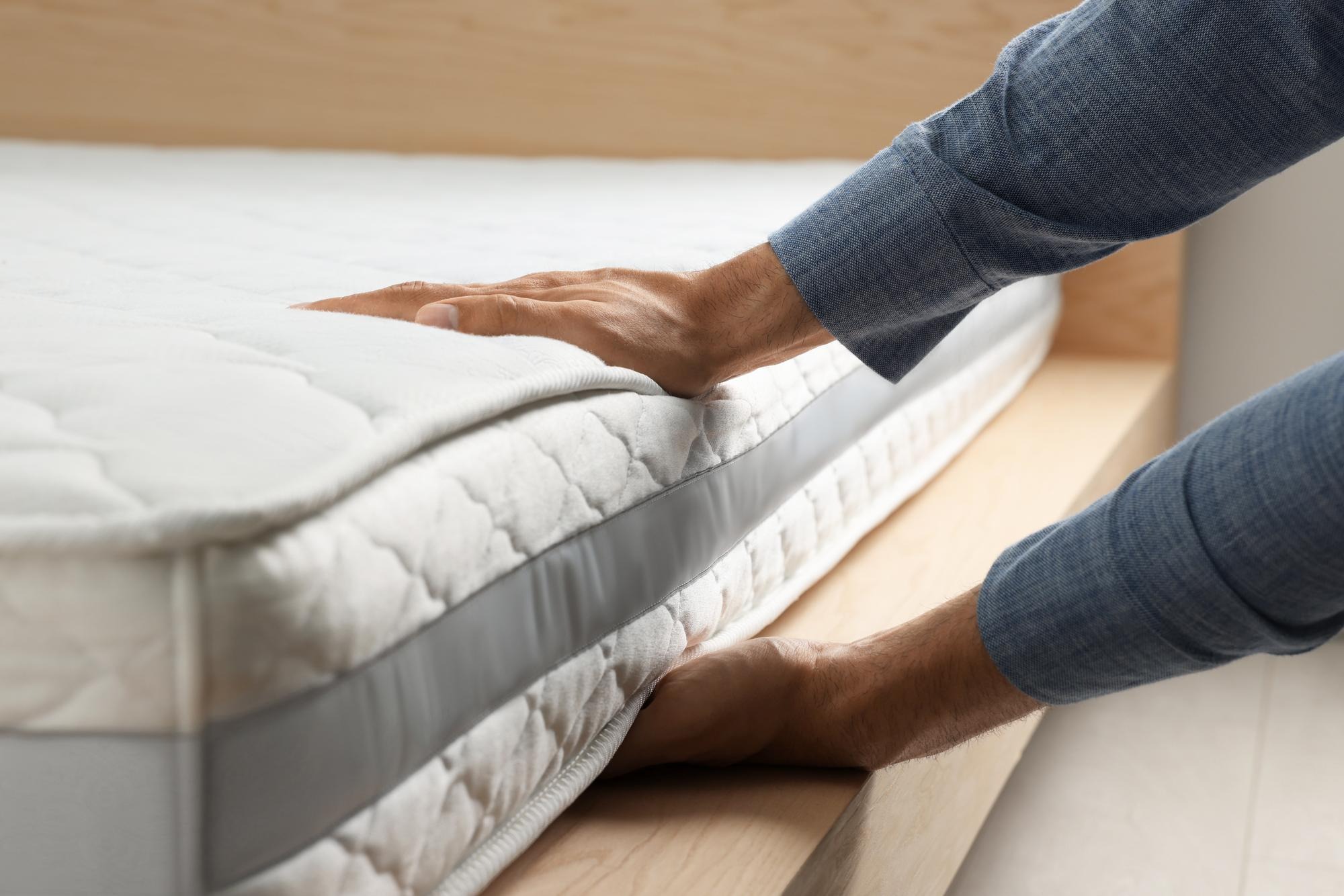
Sleep position can only do so much if the surface beneath you isn’t working with your body. A mattress that’s too soft lets your hips sink and your spine bow. One that’s too firm creates pressure points and pushes back against your natural curves. Neither lets your muscles fully relax.
The sweet spot for most people with lower back pain is a medium-firm mattress — firm enough to support the spine, with enough give to cushion the hips and shoulders. If your current mattress is beyond its best years (sagging, lumpy, or over a decade old), it’s genuinely worth considering a replacement. A worn-out mattress is one of the most common and overlooked causes of persistent morning back pain.
That said, you don’t always need a new mattress. A mattress topper can make a meaningful difference — a medium-density memory foam or latex topper adds contouring support without replacing the whole base. It’s a practical, lower-cost option if your mattress is structurally sound but lacking the right feel.
The pillow question
Most people only think about head pillows. But for lower back pain, the pillow under or between your knees is equally important. Look for something with enough firmness to hold its shape through the night — a pillow that flattens completely by 2am isn’t doing much by the time you most need it. Dedicated knee pillows (contoured, usually made of memory foam) are worth trying if standard pillows aren’t staying in place.
Your head pillow matters too. One that’s too thick or too flat throws your neck out of alignment, which pulls tension all the way down the spine. Side sleepers generally need a firmer, thicker pillow to fill the gap between the ear and shoulder. Back sleepers do better with something flatter that lets the head rest without tilting forward.
Simple Habits That Ease Lower Back Pain Through the Night
What you do in the hours before bed affects how your back feels once you’re in it. A few consistent habits can reduce the pain load before it follows you under the covers. If you want a full picture of what a calming pre-sleep evening looks like, the before bed routine guide is a good place to start.
A few minutes of slow, low-back stretching — knee-to-chest pulls, a gentle cat-cow, a supported child’s pose — releases tension that’s built up through the day before you take it to bed with you.
A warm heating pad or hot water bottle applied to the lower back for 15–20 minutes before sleep relaxes muscle tension and improves local circulation. It’s a quiet, effective form of relief.
Beyond relaxing the back specifically, a warm soak about 90 minutes before bed helps your core temperature drop afterward — which signals sleep onset. Back relief and deeper sleep in one.
Extended sitting or standing without movement stiffens the lower back by bedtime. Short walks, gentle movement breaks, and not staying in one position for hours all reduce the pain you’ll feel at night.
Morning is when the back is most vulnerable. Roll to your side first, then use your arms to push up. Avoid jackknifing straight up from flat — it puts a sharp load on the lumbar spine before it’s warmed up.
Pain disrupts sleep, and poor sleep lowers your pain threshold — it’s a cycle. A regular sleep and wake time improves sleep quality overall, which makes pain more manageable the next day.
When to Take Your Sleep Position More Seriously
Most lower back pain responds to the kind of adjustments covered here — position, support, a consistent bedtime routine. But there are situations where the pain is telling you something that deserves a closer look.
Surprisingly, night pain that wakes you up regularly — not pain caused by a bad position, but pain that arrives regardless of how you’re lying — is worth mentioning to a doctor. So is back pain that radiates down one or both legs, comes with numbness or tingling, or that has appeared suddenly without an obvious cause. These patterns can point to something more specific than general muscle tension, and getting a proper assessment means you’re treating the right thing.
For most people, though, the issue is simpler: the wrong position, an unsupportive mattress, and no wind-down routine are doing most of the damage. Fix those, and the nights get noticeably better.
A quiet wind-down routine helps your body release the day — and the tension that comes with it.
Good to know
Lower back pain and sleep quality affect each other directly. Pain disrupts sleep, and poor sleep increases inflammation and lowers the threshold at which pain is felt — which means the back hurts more the next night. Getting both better at the same time, rather than addressing just one, tends to break the cycle faster.
A Few Things Worth Trying Tonight
You don’t have to overhaul your whole bedroom to start feeling better. Some of the most effective changes are immediate and free.
- Try the knee pillow tonight — side sleepers between the knees, back sleepers under them
- Spend five minutes on gentle lower back stretches before getting into bed
- Check whether your mattress still has even support, or if there’s visible sagging where you sleep
- Use a heating pad on the lower back for 15 minutes before you lie down
- Avoid stomach sleeping, or at minimum add a thin pillow under your pelvis if it’s hard to break the habit
- Get out of bed by rolling to your side first — every single morning
Another thing worth noting: consistency matters more than perfection. Your body adapts to patterns. If you use the knee pillow every night for two weeks, maintaining that neutral spine position starts to feel natural. If you stretch before bed consistently, the muscles arrive at bedtime with less tension already in them. Small changes, done regularly, add up to genuinely different mornings.

Better mornings are possible — and the path there usually starts with one small change at bedtime.
Lower back pain at night is frustrating — but it’s rarely permanent. The right position, a little support in the right places, and a consistent pre-sleep routine can genuinely change how your back feels by morning. Start with one or two things tonight. Give them a proper run. Your spine will notice.